What Is a Gable Roof?
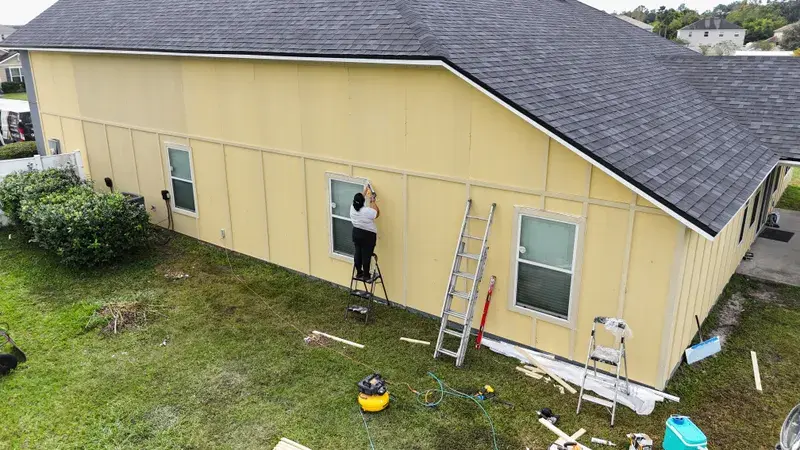
A gable roof is the simple triangular roof shape that almost every child draws when they sketch a house. It has two sloped sides that meet at a ridge running along the top of the home, creating a triangular wall (called the gable) at each end. Gables are the most common roof type in the United States and one of the most common in Florida construction, especially on homes built before the 1990s when hip roofs became dominant for hurricane resistance.
Within the gable family there are several distinct variations, each with different costs, aesthetics, and performance in Florida's hurricane wind environment. If you are planning a new construction roof, an addition, or evaluating your existing home for roof replacement, understanding the gable type you have - or want - matters for budget, code compliance, and insurance.
The Florida Hurricane Caveat
Gable roofs perform less well in hurricane winds than hip roofs because the flat triangular gable wall catches wind like a sail. In Florida, gable-roofed homes typically pay higher insurance premiums than hip-roofed homes because of this. The performance difference can be partially offset with proper bracing and modern fastener patterns - but you cannot turn a gable into a hip without rebuilding the roof.
Standard Open Gable
The standard open gable - sometimes called an A-frame gable - is the most basic version. Two roof slopes meet at a ridge, and the triangular gable end walls are exposed all the way to the peak. The eaves on the sloped sides typically extend out over the walls; the gable ends may or may not have overhangs depending on the design.
Best for: Simple ranch homes, cottages, sheds, and budget-conscious builds. The standard open gable is the cheapest roof shape to frame and to roof because it has no valleys, hips, or complex transitions. Just two big planes and a ridge.
Cost: Lowest of any gable variant. Roughly $4-6 per square foot of roof area for materials and labor on architectural shingle in Florida, putting a 1,800 sq ft home around $11,000-$14,000.
Florida considerations: The exposed gable end walls are wind-vulnerable in hurricanes. Modern Florida construction adds gable end bracing (engineered straps and blocking) to stiffen the wall against wind uplift, and the Florida Building Code requires this on new construction in high-wind zones.
Box Gable
A box gable is a standard gable with the triangular end wall enclosed by an extended eave or "boxed" out from the rest of the structure. The triangular gable section is framed into a separate boxed unit that overhangs the wall below. The result looks like the triangular gable is set into a rectangular frame, hence the name.
Best for: Homes that want a more architectural look than a simple open gable. The box gable adds visual depth and shadow lines to what is otherwise a plain rectangular form.
Cost: Slightly more than a standard gable due to the additional framing, but still on the lower end of the gable variants. Typically $4-7 per square foot installed.
Florida considerations: The boxed eave provides slightly more wind resistance than an exposed gable end because the additional framing creates a more rigid corner. Still, box gables face the same hurricane vulnerability as standard gables.
Front Gable
A front gable is a gable roof oriented so that the triangular gable end faces the front of the house rather than the side. The peak of the roof points toward the street, and the entrance is typically under the gable end. This is the iconic shape of New England colonial homes and many Victorian architectural styles.
Best for: Homes that want a classic, formal front facade. Many Florida historic homes (especially in Riverside, Avondale, San Marco, and the older parts of St. Augustine) use front gables as a defining architectural feature.
Cost: Same as a standard gable - the orientation does not change the framing cost. Typically $4-6 per square foot installed for architectural shingle.
Florida considerations: Front gables in Florida need the same gable end bracing as side-oriented gables. Some historic-district preservation guidelines require maintaining the original front gable shape during reroofing, even when a hip configuration would perform better in hurricanes.
Planning a Roof Replacement in Jacksonville?
Gimo's Roofing has installed every gable type across Northeast Florida, from simple standard gables in Mandarin to complex cross gables on historic Riverside bungalows. We will give you a free written estimate with material options.
Cross Gable
A cross gable is two or more gable roofs that intersect at right angles, creating a roof with multiple ridges and valleys. The intersecting gables can be the same size (creating a symmetrical L-shape) or different sizes (creating an asymmetrical arrangement). Cross gables are common on larger homes with floor plans that include multiple wings.
Best for: Homes with L-shaped, T-shaped, or U-shaped floor plans. Cross gables let you put a gable roof on a building that is not a simple rectangle. Most Riverside craftsman bungalows, many Avondale Tudor revivals, and a substantial portion of 1990s-2000s suburban builds in Mandarin and Orange Park use cross gable configurations.
Cost: More expensive than a standard gable because of the valley flashing, hip transitions, and increased complexity. Typically $5-8 per square foot installed for architectural shingle, putting a 2,400 sq ft cross-gable home around $14,000-$22,000.
Florida considerations: Cross gables have multiple valleys, and valleys are common leak points. Proper valley flashing - either open metal valleys or closed-cut woven shingle valleys - is critical. We strongly prefer open metal valleys for Florida cross gables because the high rainfall volume in Northeast Florida overwhelms shingle valleys faster than open metal does.
Dutch Gable
A Dutch gable is a hybrid between a gable and a hip roof. The bottom portion of the roof end is hipped (sloped from the eave up to a point partway up the roof), and the top portion is a small gable. The result looks like a hip roof with a gable "cap" sitting on top of the hipped section. This gives you most of the wind resistance of a hip roof while still showing a triangular gable face for architectural interest.
Best for: Homes that want both the hurricane performance of a hip roof and the visual character of a gable. Dutch gables are popular on upscale homes in Ponte Vedra Beach, Marsh Landing, and the Nocatee communities where homeowners want a high-end aesthetic without sacrificing wind insurance credits.
Cost: More expensive than either a pure gable or a pure hip because of the complex transition between the hipped lower section and the gabled upper section. Typically $6-9 per square foot installed.
Florida considerations: Dutch gables qualify for the hip roof shape credit on the wind mitigation form (OIR-B1-1802) only if the gable portion is small enough that the overall roof shape is "hip-dominant." Specifically, the hip area must constitute the majority of the roof surface. Confirm the calculation with your insurance carrier or a wind mitigation inspector before assuming you will get the credit.
Jerkinhead (Clipped) Gable
A jerkinhead - also called a clipped gable or half-hipped gable - is a gable roof where the top tip of the triangular gable end is "clipped off" with a small hip section. The gable is mostly intact, but instead of coming to a sharp point at the top, it has a small hipped face. The shape is reminiscent of English Tudor and Arts and Crafts architecture.
Best for: Homes with English-influenced architectural styles - Tudor revivals, Arts and Crafts bungalows, and some craftsman variations. You see jerkinhead gables most often in Riverside and Avondale on homes from the 1910s-1930s.
Cost: Slightly more than a standard gable due to the additional hip framing at the gable top. Typically $5-7 per square foot installed.
Florida considerations: The clipped top reduces the wind-catch area of the gable end somewhat compared to a full triangular gable, providing modest hurricane wind benefits. It does not qualify as a full hip roof for wind mitigation credit purposes, but it is structurally slightly better than an open gable.
Saltbox Gable
A saltbox is an asymmetrical gable where one slope is significantly longer than the other, creating a long sloping roof at the back of the home and a shorter slope at the front. The shape is named after wooden salt containers from colonial New England that had a similar profile. Saltboxes typically have two stories at the front and a single story at the back covered by the long sloping roof.
Best for: Architectural-style homes wanting a colonial or rustic look, and homes with attached single-story rear additions where the longer slope conveniently covers the addition.
Cost: Similar to a standard gable for the framing, but the larger total roof surface area on the long slope adds to material cost. Typically $5-7 per square foot installed.
Florida considerations: Saltbox roofs are uncommon in Florida construction because the asymmetric profile is more associated with cold-climate New England design. Where they do exist, they have the same hurricane vulnerability as any other gable shape.
Gable Roofs and Florida Hurricane Wind Performance
Here is the most important fact about gable roofs in Florida: they perform measurably worse than hip roofs in hurricane winds. The flat triangular gable end wall acts like a sail, catching wind and transmitting massive uplift forces into the roof structure and the wall framing below it. Hip roofs, by contrast, slope on all four sides and let wind flow over them with much less uplift.
This performance difference is reflected directly in Florida insurance premiums. The wind mitigation inspection form (OIR-B1-1802) includes a "roof shape" credit, and hip-dominant roofs qualify for a significant premium discount that gable roofs do not. On a typical $3,500 annual Florida homeowner premium, the hip vs. gable difference can be $300-$700 per year - every year, for the life of the policy.
If you have a gable roof, three things help close the gap on hurricane performance:
- Gable end bracing: Engineered straps, blocking, and structural connectors that stiffen the gable end wall against wind uplift. Required on new Florida construction in high-wind zones and a worthwhile retrofit on older homes.
- 6d ring-shank nails on a 6/12 pattern: Modern Florida code requires these for sheathing fastening, which dramatically improves uplift resistance on any roof shape including gables.
- Secondary water barrier: A fully self-adhered peel-and-stick underlayment under the entire roof gives you a backup waterproof layer if shingles are torn off in a storm.
All three of these are wind mitigation credit items that show up on the OIR-B1-1802 form and can recover some of the premium difference between gable and hip roofs. We include all three on every roof replacement we do in Northeast Florida and provide the wind mitigation paperwork with the project so you can submit it to your carrier the same week. If you are not sure how old your existing roof is, our guide to finding your roof age walks through the permit search process by county.
Key Takeaways
- Gable roofs come in seven main variations: standard, box, front, cross, Dutch, jerkinhead, and saltbox.
- Standard and box gables are the cheapest to build; Dutch gables and cross gables are the most expensive.
- Cross gables are very common on larger Northeast Florida homes with L-shaped or T-shaped floor plans.
- Dutch gables can qualify for the hip roof wind mitigation credit if the hipped portion is dominant.
- Gable roofs perform worse than hip roofs in hurricane winds and pay higher Florida insurance premiums.
- Gable end bracing, modern nail patterns, and secondary water barriers can recover some of the wind performance gap.
- Cross gable valleys are leak-prone and benefit from open metal valley flashing rather than closed-cut shingle valleys.
Free Roof Estimate in Northeast Florida
Whether your home has a simple standard gable or a complex cross gable with multiple valleys, Gimo's Roofing has installed it before. Free written estimates throughout Jacksonville, the Beaches, Ponte Vedra, St. Augustine, Orange Park, and Fernandina Beach.