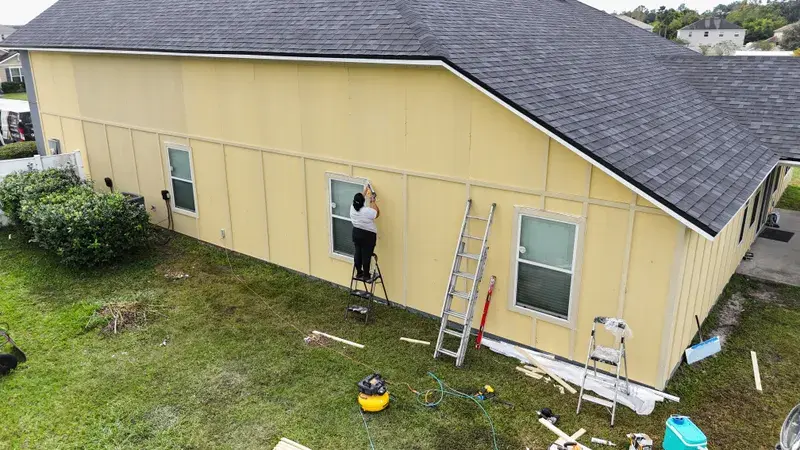
Quick Answer - Choosing Siding for Florida
Fiber cement siding (Hardie Board) is the best all-around siding choice for Florida homes because it resists hurricanes, humidity, termites, and UV damage. Vinyl siding is the most affordable option and performs well in Florida when rated for high wind zones. Engineered wood offers a natural look with better durability than real wood. Natural wood siding requires significant maintenance in Florida's climate and is best reserved for protected areas.
Quick Comparison for Florida
- - Best overall: Fiber cement (Hardie Board) - hurricane tough, termite proof, 30-50 year life
- - Best value: Vinyl - affordable, zero rot risk, 20-30 year life
- - Best natural look: Engineered wood - real wood appearance, better moisture resistance than natural
- - Most maintenance: Natural wood - beautiful but demands constant attention in Florida's humidity
Why Choosing Siding in Florida Is Different
Siding that performs perfectly in Colorado or Connecticut may fail in Florida within years. Our climate presents four specific challenges that must factor into every siding decision.
Hurricane Force Winds
Jacksonville is in a wind zone that requires siding to withstand sustained winds and wind-driven debris. Siding that tears off during a storm leaves your home's structural sheathing and insulation exposed to rain, causing catastrophic water damage. Any siding you choose must have a wind rating appropriate for your location, typically 110-130 mph for the Jacksonville area.
Relentless Humidity
Jacksonville averages 74% relative humidity. This constant moisture attacks wood-based products, promotes mold and mildew growth, and can cause swelling, warping, and rot. Your siding must either be inherently moisture-resistant (vinyl, fiber cement) or be maintained with moisture-barrier finishes that require regular reapplication.
Intense UV Radiation
Florida's UV exposure fades paint, degrades plastics, and breaks down wood fibers faster than most other US climates. Siding on south and west-facing walls takes the most punishment. Materials with factory-applied, baked-on finishes (like Hardie Board ColorPlus) resist UV far better than field-painted products.
Subterranean Termites
Florida has the highest termite pressure in the United States. Formosan subterranean termites, among the most destructive species, are well-established in Northeast Florida. Any wood-based siding product that contacts or is close to the soil is at risk. Non-wood siding materials eliminate this concern entirely.
Need Professional Help?
Gimo's Roofing offers free inspections and estimates throughout Jacksonville and Northeast Florida.
Vinyl Siding - the Affordable Workhorse
Vinyl siding is the most installed siding material in America and for good reason. It is affordable, requires virtually no maintenance, never rots, and is immune to termites. Modern vinyl siding has come a long way from the thin, wavy panels of the 1980s.
Vinyl Pros for Florida
- Zero rot risk: Vinyl is plastic, so humidity and moisture have no effect on the material itself
- Termite proof: Termites have zero interest in vinyl
- Low maintenance: No painting required, ever. Periodic washing with a garden hose is all that is needed
- Affordable: $4-8 per square foot installed, the lowest cost option
- Color throughout: Color is embedded in the material, so scratches do not show a different color underneath
- Insulated options: Insulated vinyl siding adds R-value and structural rigidity
Vinyl Cons for Florida
- Melting risk: Vinyl can warp or melt when exposed to reflected sunlight from energy-efficient windows on adjacent structures
- Fading: Dark-colored vinyl fades noticeably within 5-10 years in Florida's UV. Light colors hold up much better
- Impact damage: Standard vinyl cracks on impact from debris, baseballs, or hail. Impact-resistant grades are available but cost more
- Wind limitations: Standard vinyl may not meet wind requirements for all Florida zones. Look for vinyl rated for 110+ mph
- Appearance: Even premium vinyl does not replicate the depth and texture of wood or fiber cement as convincingly
Best Vinyl Siding for Florida
If you choose vinyl for your Jacksonville home, invest in thick-gauge panels (0.044 inch or thicker), insulated-back options for added rigidity and R-value, and light to medium colors that resist UV fading. Verify the product carries a wind rating appropriate for your location. Gimo's Roofing installs premium vinyl siding rated for Florida's wind requirements.
Fiber Cement Siding (Hardie Board) - the Florida Champion
Fiber cement siding, most commonly known by the brand name Hardie Board (James Hardie Industries), is made from a mixture of cement, sand, and cellulose fibers. It combines the appearance of real wood with the durability of concrete. In Florida, fiber cement has become the gold standard for homes that want long-lasting, hurricane-resistant siding with premium curb appeal.
Fiber Cement Pros for Florida
- Hurricane resistance: Fiber cement is impact-resistant and can withstand hurricane-force winds when properly fastened
- Termite proof: Cement-based material is completely inedible to termites
- Fire resistant: Non-combustible, providing an important safety advantage
- Moisture resistant: Does not rot, swell, or warp from humidity (though it does absorb some moisture if not properly sealed)
- Premium appearance: Available in lap, shingle, panel, and board-and-batten profiles that convincingly mimic natural wood
- Long lifespan: 30-50 years with proper installation and maintenance
- ColorPlus technology: James Hardie's factory-applied finish resists fading, cracking, and peeling far longer than field-applied paint
- Insurance benefits: Some Florida insurers offer discounts for non-combustible, impact-resistant siding
Fiber Cement Cons for Florida
- Higher cost: $8-14 per square foot installed, roughly double the cost of vinyl
- Heavy weight: Fiber cement is significantly heavier than vinyl, requiring more structural support and adding labor cost
- Professional installation required: Cutting fiber cement creates silica dust that requires specialized safety equipment
- Painting required: Non-ColorPlus products need painting after installation and repainting every 10-15 years
- Moisture absorption: If cut edges or nail holes are not properly sealed, fiber cement can absorb moisture that leads to cracking in freeze cycles (less concern in Jacksonville)
Best Fiber Cement for Florida
James Hardie specifically manufactures a HZ10 product line engineered for high-humidity climates like Florida. The HZ10 formulation resists moisture better than their standard products. If choosing fiber cement for your Jacksonville home, insist on HZ10 or equivalent humidity-zone products. The ColorPlus factory finish adds cost but eliminates the need for field painting and provides a 15-year color warranty.
Engineered Wood Siding - Natural Look, Better Durability
Engineered wood siding is made from wood strands or fibers bonded with resins and treated with zinc borate for insect and moisture resistance. LP SmartSide is the dominant brand. It provides the warmth and texture of real wood with significantly better resistance to Florida's moisture and insects.
Engineered Wood Pros for Florida
- Natural wood appearance: The most convincing wood look of any non-wood product
- Treated for insects: Zinc borate treatment deters termites and other wood-boring insects
- Moisture resistance: Resin-bonded construction resists moisture better than natural wood
- Impact resistant: More impact-resistant than vinyl and comparable to fiber cement
- Lighter than fiber cement: Easier and less expensive to install than Hardie Board
- Cost: $5-10 per square foot installed, between vinyl and fiber cement
Engineered Wood Cons for Florida
- Still wood-based: Despite treatments, engineered wood is still more vulnerable to moisture than vinyl or fiber cement over long periods
- Painting required: Must be painted within 60 days of installation and repainted every 7-10 years
- Edge sealing critical: Cut edges must be field-sealed to prevent moisture intrusion
- Shorter lifespan: 20-30 years, shorter than fiber cement's 30-50 years
- Warranty concerns: Some warranties have exclusions for excessive moisture exposure that could be problematic in Florida
Natural Wood Siding - Beautiful but High Maintenance
Real wood siding, including cedar, cypress, and pine, offers unmatched natural beauty and warmth. However, Florida's climate is the toughest environment for natural wood siding in the continental United States. The combination of humidity, rain, UV, and termites means wood siding in Jacksonville requires constant attention.
Natural Wood in Florida - Realistic Expectations
- Painting or staining: Required every 3-5 years in Florida, compared to 7-10 years in drier climates
- Termite treatment: Regular professional termite inspections and treatment are mandatory
- Rot repair: Even with excellent maintenance, expect periodic repair of rotted boards
- Mold and mildew: North-facing and shaded walls will develop mold that requires cleaning
- Cost: $7-15+ per square foot installed, plus significantly higher ongoing maintenance costs
- Best species for Florida: Cypress and cedar have natural rot and insect resistance. Pine requires treatment
If you love the look of wood, consider using natural wood only on protected areas like covered porches and gable accents, and use fiber cement or engineered wood for the main body of the house.
Siding Cost Comparison in Jacksonville FL
2026 Jacksonville Siding Costs (per square foot installed)
- - Vinyl siding: $4-8 per sq ft (1,500 sq ft house: $6,000-12,000)
- - Engineered wood (LP SmartSide): $5-10 per sq ft (1,500 sq ft house: $7,500-15,000)
- - Fiber cement (Hardie Board): $8-14 per sq ft (1,500 sq ft house: $12,000-21,000)
- - Natural wood (cedar/cypress): $7-15 per sq ft (1,500 sq ft house: $10,500-22,500)
When comparing siding costs, factor in the total cost of ownership over 20-30 years. Vinyl and fiber cement require minimal maintenance spending. Natural wood requires thousands of dollars in paint, stain, termite treatment, and siding repair over the same period. The cheapest product to buy is not always the cheapest to own.
Maintenance Requirements by Siding Material
Annual Maintenance Comparison
- - Vinyl: Rinse with hose 1-2x/year. No painting. Replace damaged panels as needed. Total annual cost: $0-100
- - Fiber cement (ColorPlus): Rinse 1-2x/year. Touch up caulk every 5-7 years. Repaint every 15+ years. Total annual cost: $50-200
- - Fiber cement (field-painted): Same as above but repaint every 10-12 years. Total annual cost: $100-300
- - Engineered wood: Rinse 1-2x/year. Repaint every 7-10 years. Inspect and seal any exposed edges. Total annual cost: $150-400
- - Natural wood: Paint/stain every 3-5 years. Termite treatment annually. Repair rot as needed. Clean mold. Total annual cost: $500-1,500
Key Factors for Your Siding Decision
- Budget (upfront vs long-term). If upfront cost is the priority, vinyl wins. If you are calculating total cost of ownership over 20+ years, fiber cement wins because maintenance costs are minimal
- Wind zone rating. Verify any product you consider is rated for your location's wind speed requirements. This is non-negotiable in Florida
- HOA requirements. Many Jacksonville communities require specific siding materials or prohibit vinyl. Check before shopping
- Home style. Craftsman and historic homes look best with fiber cement or wood. Ranch and contemporary homes work well with any material. Modern designs often use board-and-batten fiber cement profiles
- Maintenance commitment. Be honest about whether you will maintain wood siding every 3-5 years. If not, choose a lower-maintenance material
- Coordination with your roof. Your siding and roof color should be coordinated for a cohesive exterior. Plan both together during a roof replacement or siding project
Get a Free Roofing Estimate
Instant online pricing or schedule an in-person assessment. Financing available from $99/month.
You Might Also Read
- Roof Replacement Cost in Jacksonville FL - 2026 pricing guide
- Best Roofing Materials for Florida - Complete comparison
- How to Choose a Roofing Contractor - Find quality contractors
Key Takeaways - Choosing Siding for Florida
- - Fiber cement (Hardie Board) is the best overall siding for Florida's hurricanes, humidity, and termites
- - Vinyl is the best value with zero rot risk and minimal maintenance
- - Natural wood requires 3-5x more maintenance in Florida than in northern climates
- - Always verify wind ratings match your Florida zone requirements
- - HZ10 (humidity zone) products are recommended for any fiber cement in Florida
- - Total cost of ownership over 20-30 years matters more than install price alone
- - Coordinate siding and roof choices for a cohesive, high-value exterior
Need help choosing the right siding for your Jacksonville home? Gimo's Roofing installs vinyl, fiber cement, and engineered wood siding throughout Jacksonville, St. Augustine, and Northeast Florida. Call (904) 606-5313 for a free siding consultation and estimate.