
Roof Valley Repair
Roof valleys, where two slopes meet, handle concentrated water flow and are the most leak-prone area on any roof. Valley problems include worn shingles, damaged flashing, debris dams, and improper installation. Fixes range from sealing and shingle replacement to full valley reconstruction during a reroof. Catching valley problems early is the goal of a professional roof repair.
If you have noticed a ceiling stain below a valley, do not wait for the next storm. A targeted roof repair usually stops the water and protects the decking before rot sets in. Active dripping during rain calls for emergency roof repair, while a valley that has failed across multiple sections often signals it is time to weigh a full roof replacement. The right call depends on how far the damage has spread, which an inspection confirms.
Valley Facts:
- • Valleys carry most water during rain
- • Open metal valleys outperform closed valleys
- • Debris accumulation accelerates wear
- • Often the first area to show problems
Why Valleys Are the Most Leak-Prone Area
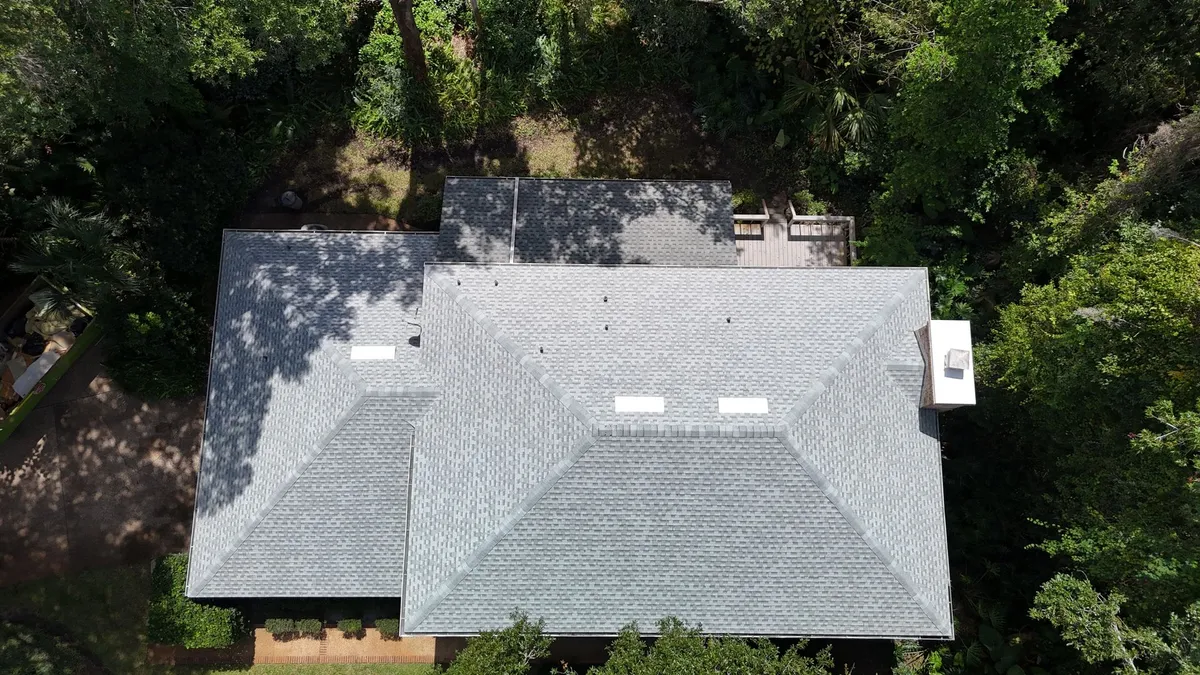
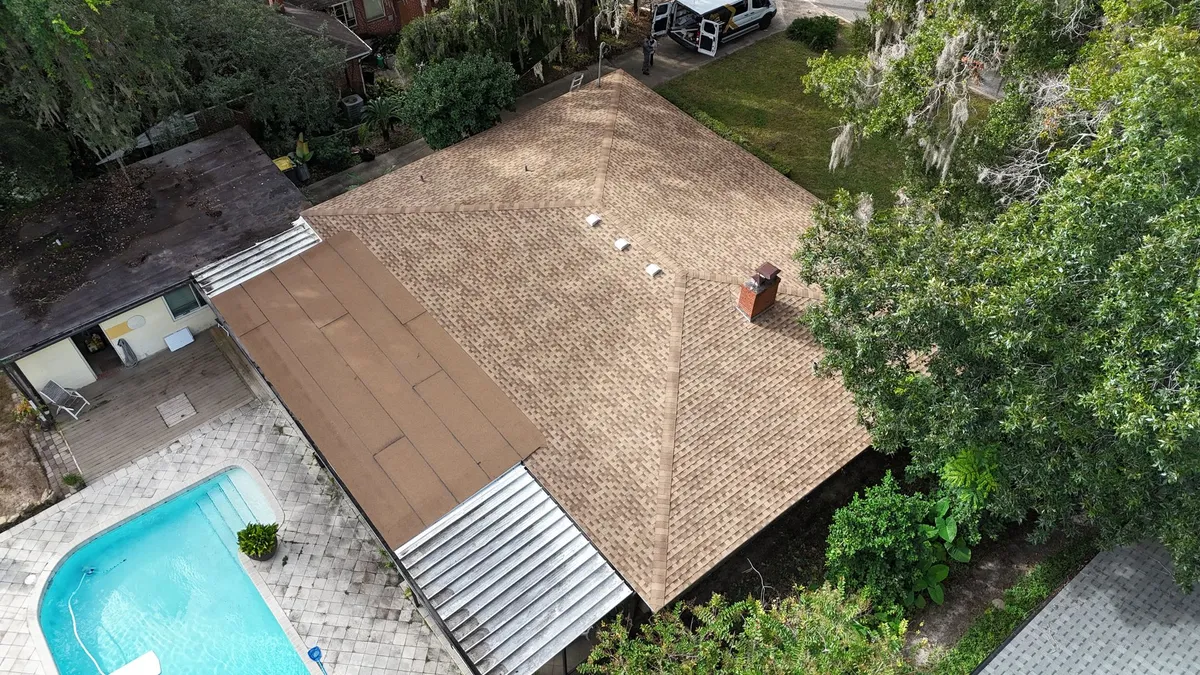
A valley is the inside angle where two roof planes meet, forming a channel that funnels runoff from both slopes into one narrow path. Every other part of the roof sheds water across a broad surface, but a valley concentrates it. On a roof where two large slopes drain into a single valley, that channel can carry several times the volume of water that any flat shingle field handles. Faster water moving through a tighter space scours granules off shingles, lifts edges, and finds the smallest gap in the flashing underneath.
Jacksonville and Northeast Florida make this worse. The region averages roughly 50 inches of rain a year, much of it arriving in short, intense summer downpours that can drop an inch or more in under an hour. During those bursts, a valley does not see a steady trickle. It sees a surge. Add wind-driven rain from afternoon storms and the hurricane season that runs June through November, and the valley is the part of the roof under the most repeated stress. That is why valleys are usually the first place a roof shows trouble and the most common origin point for interior leaks.
Types of Roof Valleys
Not all valleys are built the same way, and the construction method directly affects how well the valley sheds water and how easy it is to repair. There are three common approaches.
Open Valley
An open valley leaves a strip of metal flashing exposed down the center, with shingles cut back on both sides so they never meet in the middle. The metal is typically a galvanized steel, aluminum, or coated valley flashing 16 to 24 inches wide, often formed with a raised center rib that keeps water from one slope from washing across to the other. This is the configuration most professionals recommend for Florida.
- Metal flashing visible in valley center
- Shingles cut back from center line
- Best water handling capacity for heavy rain
- Easiest to inspect, clean, and repair
- Smooth metal channel sheds debris better than shingle granules
Closed-Cut Valley
In a closed-cut valley, shingles from one slope run across the valley and shingles from the other slope are trimmed in a clean line a couple of inches off the center. No metal is exposed. It looks tidy and costs less to install, but the shingle surface in the valley wears faster and is far harder to inspect because the flashing and underlayment are hidden beneath the shingles.
- Shingles cover the valley, no exposed metal
- Cleaner appearance and lower install cost
- Granule loss in the channel happens faster
- Harder to inspect and repair once installed
Woven Valley
A woven valley interlaces shingles from both slopes through the center. It was common on older three-tab roofs but is not suited to most modern architectural shingles, which are too thick to weave cleanly. The result is a bulky channel that traps debris and is very difficult to repair without disturbing a wide area.
- Shingles from both slopes interweave
- Creates a bulky, debris-catching channel
- Not recommended for most modern applications
- Difficult to repair without a wide tear-off
Why Florida Rain Overwhelms Closed-Cut Valleys
Closed-cut and woven valleys rely on the shingle surface to carry water. Shingle granules are designed to shed rain across a slope, not to act as a high-speed channel. When Florida's intense rain forces a large volume of water down a closed valley, the water moves fast enough to lift the cut shingle edges and work underneath them. Over a few seasons, the granules in that channel wear down to the asphalt mat, and the shingle loses its waterproofing exactly where the water load is heaviest.
A woven valley adds another problem: the interwoven shingles create slight ridges and low spots that catch leaves, pine needles, and shingle grit. Those collect into a dam, water backs up behind it, and standing water finds its way under the shingles. An open metal valley avoids both failure modes because the smooth, sloped metal moves water out quickly and gives debris nothing to grip. For homes under heavy tree cover or facing frequent storm runoff, the difference in long-term reliability is significant.
Signs of Valley Failure
Valley problems often show up inside the home before they are obvious on the roof. Watch for these warning signs and act on them early.
- Interior ceiling or wall stains: A brown or yellow stain that lines up below a valley is a classic valley-leak signature.
- Granule loss in the channel: Bare, smooth shingle showing through where granules have washed away, often visible as dark streaks down the valley.
- Rusted or pitted metal: On open valleys, rust spots, pinholes, or flaking coating mean the flashing is near the end of its service life.
- Lifted or curled shingle edges: Edges along the valley that no longer lie flat let wind-driven rain underneath.
- Debris dams and dark moisture lines: Trapped leaves and standing water that lingers after rain.
- Cracked sealant or exposed nail heads: Failed prior repairs that have opened back up.
For a deeper look at how water tracks through valleys during a storm, see our guide on roof leaks in heavy rain.
Need Professional Help?
Gimo's Roofing offers free inspections and estimates throughout Jacksonville and Northeast Florida.
Common Valley Problems
- Worn shingles: High water flow erodes granules faster than anywhere else on the roof.
- Debris accumulation: Leaves and pine needles trap moisture and form dams.
- Flashing damage: Rust, pinholes, or lifted edges on metal valleys.
- Improper overlap: Shingles cut too far into the channel let water get underneath.
- Short or missing underlayment: Inadequate self-adhered membrane under the valley leaves no backup layer.
- Clogged valley: Debris dams water and causes pooling that backs up under shingles.
The Valley Repair Process Step by Step
A proper valley repair is more than dropping sealant down the channel. A complete repair follows a clear sequence so the valley is rebuilt to last, not just patched until the next storm.
- Inspect and trace the leak. Confirm the water entry point, since valley stains can travel several feet before showing inside.
- Remove the affected shingles. Shingles on both sides of the valley are carefully lifted to expose the flashing and underlayment.
- Check the decking. Any soft, delaminated, or rotted plywood under the valley is cut out and replaced so new materials have a solid base.
- Install self-adhered underlayment. A peel-and-stick membrane runs the full length of the valley, sealing around fasteners as the first waterproof layer.
- Set new valley flashing. Open-valley metal is placed and fastened only along the outer edges so no nails penetrate the water path, with a raised center diverter where applicable.
- Re-shingle and trim. Shingles are cut back from the center on an open valley and sealed at the edges so wind-driven rain cannot get under them.
- Seal and verify. Edges and any necessary penetrations are sealed, then the repair is checked, ideally with a water test.
The National Roofing Contractors Association publishes the industry standards that guide valley and flashing work. You can review their resources at the NRCA.
When a Valley Leak Means Partial Versus Full Replacement
A single failing valley on an otherwise sound roof is usually a localized repair or a valley reconstruction. The work is contained to that channel and the shingles immediately around it. But a valley leak can also be the symptom that pushes a decision toward full replacement, and a few factors tip the scale.
- Roof age: If asphalt shingles are past 15 to 20 years, a valley repair on aging shingles is short-lived money. A roof near the end of its life is often better served by replacement.
- Extent of decking damage: Widespread rot under and beyond the valley signals long-term water intrusion that a patch will not solve.
- Multiple failing valleys: When several valleys show the same wear, the whole roof is reaching its limit, not just one channel.
- Matching shingles: Discontinued or sun-faded shingles make a clean repair hard to blend, and a full replacement avoids a mismatched patch.
If you are weighing your options, our breakdown of roof repair versus replacement walks through the same trade-offs in detail.
Repair Options and Cost Factors
Valley repair cost depends on the scope of work, roof pitch and access, shingle type, how much decking needs replacing, and how many valleys are affected. The ranges below are general guides for a single valley in the Jacksonville area, and a free inspection gives you a firm number for your roof.
Minor Repairs
- Sealing lifted edges and small gaps
- Replacing individual damaged shingles
- Removing debris and cleaning the channel
- Cost: $150 to $400
Flashing Replacement
- Removing shingles from the valley area
- Installing new valley flashing and underlayment
- Re-shingling with matching materials
- Cost: $400 to $800 per valley
Full Valley Reconstruction
- Complete tear-off of the valley area
- Inspect and replace damaged decking
- New self-adhered underlayment and metal flashing
- New shingles on both slopes
- Cost: $800 to $1,500 per valley
Preventing Valley Problems
- Keep valleys clear of leaves, pine needles, and debris
- Trim overhanging tree branches that drop debris into channels
- Inspect valleys at least once a year and after major storms
- Address minor issues promptly before water reaches the decking
- Choose open metal valleys when you reroof for the best long-term performance
Get a Free Roofing Estimate
Instant online pricing or schedule an in-person assessment. Financing available from $99/month.
You Might Also Read
- Roof Repair vs Replacement - When to repair, when to replace
- Roof Leaks in Heavy Rain - 7 common causes and fixes
- Roof Replacement Cost Jacksonville - 2026 pricing guide
Key Takeaways: Roof Valleys
- • Valleys handle concentrated water, the most leak-prone areas
- • Open metal valleys perform best in Florida's heavy rain
- • Keep valleys clear of debris to prevent damming and wear
- • Address problems early, valley leaks cause significant interior damage
- • Full reconstruction needed if flashing or decking is compromised
Valley leaking? Contact Gimo's Roofing for assessment. Call (904) 606-5313.