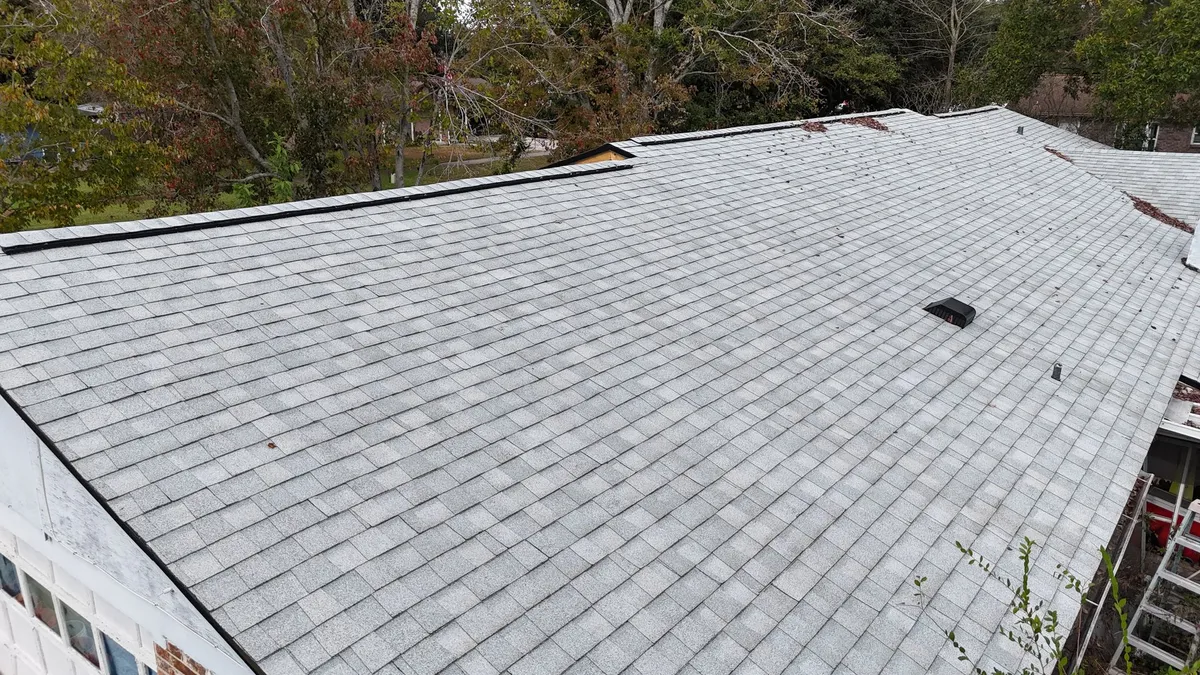

Townhouse and Condo Roofing
Roofing responsibility in townhomes and condos depends on your ownership structure and HOA documents. In most condos, the association maintains the roof using reserve funds or special assessments. Many townhomes have individual roof responsibility. Understanding your documents before buying, or before a leak, is essential. When the time comes, we handle condo and townhome roof replacement across Northeast Florida.
Before you call any contractor, confirm who actually owns the roof above your unit, because that single fact decides whether you fund a roof replacement yourself or wait on a board vote. Gimo's Roofing works with both individual homeowners and associations across the metro, and we routinely walk owners through their declaration language before quoting any work. If you own a fee simple townhome in our service area, our Jacksonville roofing team can inspect and estimate your roof directly. For association-owned buildings, our commercial roofing crews handle multi-unit and shared-structure projects that need board approval and phased scheduling.
Key Points:
- • Read your Declaration of Condominium/CC&Rs carefully
- • HOA-maintained roofs use reserves or special assessments
- • Individual-maintained roofs may need HOA approval
- • Florida law requires reserve studies for condos
Understanding Ownership Structures
The roof over an attached home in Florida is governed by recorded documents, not by who lives under it. A condominium is created and controlled by a Declaration of Condominium recorded under Florida Statutes Chapter 718, while a fee simple townhome is governed by a homeowners association declaration and covenants under Chapter 720. The titles look similar from the curb, but they assign roof responsibility very differently. Read the actual recorded document for your unit rather than relying on what a neighbor or a real estate listing tells you.
Who Owns the Roof
In a condominium, the roof is almost always a common element. You own the airspace inside your unit, typically from the unfinished interior surface of the walls, floors, and ceiling inward, and the association owns the structure that protects it. That means the board controls roof maintenance, repair, and replacement, and individual owners cannot hire a roofer to work on the building on their own. In a fee simple townhome, you usually own the structure of your unit, including the roof deck and covering above it, even though the building shares walls with neighbors. The declaration spells out exactly where the boundary sits, and on attached homes that boundary often runs down the center of a shared wall.
Condominiums
- You own interior space (from drywall in)
- Association owns building exterior including roof
- HOA responsible for roof maintenance and replacement
- Funded through reserves and/or assessments
Townhomes (Fee Simple)
- You own your unit including exterior/roof
- Individual owner responsible for their roof
- HOA may have approval authority over materials/colors
- Shared walls may complicate some repairs
Townhomes (Condo Title)
- Structured like condos, HOA owns exterior
- Association responsible for roof
- Check your specific documents
Need Professional Help?
Gimo's Roofing offers free inspections and estimates throughout Jacksonville and Northeast Florida.
When HOA Is Responsible
When the association owns the roof, the board contracts the work, selects the material within the declaration limits, and pays for it from association money. Individual owners do not get to pick their own roofer or change the roof color on their section. Your job as an owner is to understand how the association funds the project, because that funding usually comes back to you through dues, a special assessment, or both. The full statutory framework that governs condominium common elements and reserve funding is set out in Florida Statutes Chapter 718.
Funding Options
- Reserves: Funds set aside from regular dues
- Special Assessment: One-time fee charged to all owners
- Loan: Association may finance major repairs
- Combination: Often reserves plus assessment
Reserve Funding and Special Assessments
A reserve is money collected over time so that a known future cost, like a roof that reaches the end of its service life, is paid for gradually instead of all at once. A well-run association funds the roof reserve so that when the covering needs replacement, the cash is already there. When reserves fall short, the board has to levy a special assessment, which is a one-time charge split among all owners. Roof assessments can run into the thousands of dollars per unit depending on building size, roof type, and how badly underfunded the reserve was. Before buying any condo, request the most recent reserve study and the reserve fund balance so you understand whether a large assessment is likely in the near term.
Florida Milestone Inspections and Reserve Studies
After the 2021 building collapse in Surfside, the Florida Legislature passed Senate Bill 4-D in 2022, which created two new requirements that directly affect roof and structural funding. The first is the milestone inspection, a structural safety inspection required for condominium and cooperative buildings that are three stories or more in height. A milestone inspection must generally be completed by the time the building reaches 30 years of age, and the timeline is shorter for buildings within three miles of the coastline. After the initial inspection, follow-up inspections are required on a recurring basis. The second requirement is the structural integrity reserve study, often shortened to SIRS, which an association must have performed for those same buildings of three stories or more.
Florida Reserve Requirements
- Condos must maintain reserves for roof replacement
- Structural integrity reserve study required for buildings three stories or more
- Milestone inspection required at about 30 years, sooner near the coast
- Reserves for roof and structural items can no longer be freely waived
A structural integrity reserve study must include the roof among the items it studies, along with the structure, foundation, load-bearing walls, fireproofing, plumbing, electrical, waterproofing, exterior painting, and windows. For these specified items, the law removed the ability of owners to simply vote to waive or reduce reserves the way they could in the past. The practical result for owners is that roof reserves are now harder to skip, which protects buildings from deferred maintenance but can also raise dues. If you own in a multi-story coastal building near our beaches, expect roof funding to be on the agenda, and consider a professional inspection so the board is working from accurate condition data.
When Owner Is Responsible
If you own a fee simple townhome, you control the roof the same way a single-family owner does, with one important difference: your roof is physically attached to your neighbors, and your declaration almost certainly gives the association a say in how it looks. You can choose when to replace, but you usually cannot choose any material or color you want without approval. Plan the project around both the architectural rules and the neighbors who share your structure.
What to Know
- You control timing of replacement
- HOA may restrict material choices
- Architectural approval often required
- Coordinate with attached neighbors
Coordinating with Neighbors and the Board
On attached homes, your roof project becomes your neighbor's project the moment a crew steps onto the shared structure. Start by submitting an architectural review request to the board before you sign anything, since most associations require written approval of the material, color, and sometimes the contractor. Give attached neighbors advance notice of the start date, expected noise, dumpster placement, and how long the tear-off will take. Where multiple owners in a building need roofs around the same time, replacing adjacent sections together often produces a cleaner result and a better price than doing them piecemeal. A coordinated schedule also reduces the number of times flashing along a shared wall has to be opened and resealed.
Shared Wall and Party Wall Roofing
A party wall is the shared wall between two attached units, and on many townhomes it extends up through the roofline as a fire separation. Where that wall meets the roof, the assembly often has to maintain a fire rating, so the underlayment, decking, and any cap details at the wall may be specified differently than on an open field of roof. Flashing along a shared wall serves both units at once, which is why opening one side can expose the other to leaks if it is not detailed correctly. A roofer working a single unit in an attached row needs to tie new flashing into the neighbor's existing roof without compromising the seal on either side. These details are routine for an experienced crew but easy to get wrong for a contractor who only does detached single-family homes.
Material Choices for Attached Units
Material selection for an attached home is partly a design decision and partly a coordination decision. Architectural asphalt shingles are the most common choice because they match easily across a row, are simple to repair, and keep your section visually consistent with neighbors. Metal and tile are options where the declaration allows them and where the whole building can match, since a single metal unit in a row of shingle roofs rarely passes architectural review. Whatever the material, color and profile usually have to match the rest of the building, so confirm the approved palette with the board before ordering. If you want a side-by-side comparison of how each material performs in our climate, see our guide on the best roofing materials for Florida.
Shared Wall Considerations
- Fire-rated materials may be required at party walls
- Flashing at shared walls affects both units
- Communicate with neighbors during project
Insurance Considerations
Insurance for attached homes follows ownership. When the association owns the roof, its master policy covers the building exterior, and your individual unit policy covers what is inside. When you own the roof on a fee simple townhome, you typically carry coverage for the full structure including the roof. After a storm, the claim path differs depending on which policy applies, so confirm before filing.
- HOA Master Policy: Covers building exterior including roof
- HO-6 Policy: Your condo insurance covers interior
- Townhome Policies: May need full structure coverage
- After Storm: Coordinate claims with HOA if applicable
Get a Free Roofing Estimate
Instant online pricing or schedule an in-person assessment. Financing available from $99/month.
You Might Also Read
- Roof Replacement Cost in Jacksonville FL - 2026 pricing guide
- Best Roofing Materials for Florida - Complete comparison
- Cleanup After Roof Replacement - What to expect
Key Takeaways: Townhouse and Condo Roofing
- • Read your documents to understand responsibility
- • Condo roofs usually HOA responsibility
- • Fee simple townhomes usually owner responsibility
- • Reserves are critical, under-reserved HOAs face assessments
- • Get HOA approval before individual roof work
Questions about townhouse or condo roofing? Contact Gimo's Roofing, we work with both individual owners and HOAs. Call (904) 606-5313.


