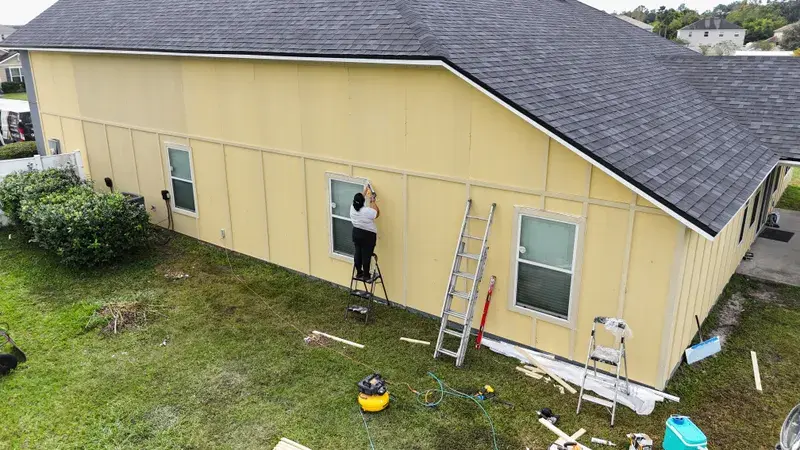
When your roof is actively leaking: (1) Move valuables away from the leak, (2) Place buckets or containers to catch water, (3) Document the damage with photos, (4) Call an emergency roof repair professional immediately. Do not attempt to climb on a wet roof. Emergency roof repair services can typically respond within hours to prevent further damage.
Roof Emergency? Call Now
If your roof is actively leaking, call Gimo's Roofing at (904) 606-5313 for 24/7 emergency service. We respond quickly to prevent water damage to your home.
Immediate Steps When Your Roof Is Leaking
The first few minutes after discovering a roof leak are critical. How you respond determines whether you're dealing with a minor cleanup or thousands of dollars in water damage to floors, walls, and personal belongings. Take these steps immediately to minimize damage:
- Stay Calm and Safe: Don't panic. Avoid electrical hazards near water.
- Move Valuables: Get furniture, electronics, and important items away from the leak area.
- Contain the Water: Place buckets, pots, or containers under drips.
- Protect Floors: Use towels or plastic sheets to protect flooring.
- Document Everything: Take photos and videos before cleanup.
- Call a Professional: Contact an emergency roofer immediately.
How to Contain Water from a Roof Leak
For Active Dripping
- Place large containers under drips
- Empty containers before they overflow
- Use towels around container bases to catch splashes
- Consider a wet/dry vacuum for pooling water
For Bulging Ceiling
If your ceiling is bulging with water:
- Place a large container beneath the bulge
- Carefully puncture the center with a screwdriver
- This controlled release prevents ceiling collapse
- Let water drain into the container
Yes, this creates a hole, but a small controlled hole is far better than a collapsed ceiling causing extensive damage. For a deeper look at tracking down the source of water intrusion, see our complete roof leak repair guide.
Need Professional Help?
Gimo's Roofing offers free inspections and estimates throughout Jacksonville and Northeast Florida.
Common Causes of Emergency Roof Leaks
Understanding why your roof is leaking helps you communicate effectively with your roofer and anticipate the type of repair needed. In Jacksonville, the most common causes of emergency roof leaks include:
Storm Damage
Jacksonville sits in one of the most storm-prone regions in the country. Tropical storms, hurricanes, and severe thunderstorms can rip shingles off your roof, crack tiles, and drive rain underneath roofing materials through sheer wind pressure. Even storms that don't seem especially severe can cause hidden damage that leads to leaks days or weeks later. After any major storm, it's wise to schedule a professional inspection for hurricane and storm damage signs.
Fallen Trees and Debris
Overhanging branches and nearby trees are a significant risk during storms. A large limb or entire tree falling on your roof can puncture the decking and create an immediate, large-scale leak. Even smaller branches can dislodge shingles or crack tiles on impact. Keeping trees trimmed as part of your seasonal roof maintenance routine reduces this risk considerably.
Failed Flashing
Flashing is the metal or sealant material installed around roof penetrations like vents, chimneys, skylights, and where the roof meets walls. Over time, Florida's intense UV radiation and thermal cycling cause flashing sealants to crack and metal to corrode. When flashing fails, water funnels directly into your home along these vulnerable joints. Flashing failure is one of the most common causes of both slow and emergency leaks.
Pipe Boot Failure
Pipe boots are the rubber or neoprene seals around plumbing vent pipes that protrude through your roof. These boots degrade faster than almost any other roofing component because of constant sun exposure. Once the rubber cracks or pulls away from the pipe, every rain event sends water straight down the pipe and into your attic or walls. Pipe boot failure is an extremely common emergency leak source on roofs that are 8-15 years old.
Heavy Rain Ponding
While ice dams are a major concern up north, Jacksonville homeowners face a similar problem: heavy rain ponding. When gutters are clogged, drainage is poor, or flat roof sections don't have adequate slope, water pools on the roof surface. Standing water eventually finds its way through even minor imperfections in the roofing material. During Jacksonville's summer downpours, when several inches of rain can fall in under an hour, ponding can turn a small vulnerability into an emergency leak in minutes.
Document the Damage for Insurance
Before major cleanup, document everything:
- Photos: Take wide shots and close-ups of damage
- Video: Walk through showing extent of water intrusion
- Written Notes: Record date, time, and conditions
- Save Damaged Items: Don't throw away damaged items until insurance sees them
- Keep Receipts: Document emergency repair costs and supplies
This documentation is essential for insurance claims. The more thorough your records, the smoother the claims process. Florida law requires homeowners to report roof damage to their insurer promptly, and detailed records significantly strengthen your claim.
For a step-by-step walkthrough of the insurance process, including what adjusters look for and how to avoid common pitfalls, read our Florida roof insurance claim guide.
Calling an Emergency Roofing Professional
Choosing the right emergency roofer matters. Look for a company that offers genuine 24/7 emergency response, is licensed and insured in Florida, and has established roots in the Jacksonville community. Avoid storm chasers and out-of-state contractors who appear after major weather events. Gimo's Roofing provides 24/7 emergency roof repair across Jacksonville and surrounding areas with fast response times.
What to Tell Them
- Location and extent of leak(s)
- When it started
- Current weather conditions
- Whether leak is getting worse
- Any known roof damage or issues
What to Expect
- Response within hours (not days) for true emergencies
- Temporary repair to stop the leak
- Assessment of damage extent
- Plan for permanent repair
- Help with insurance documentation if needed
What Emergency Roof Repair Involves
Temporary Repairs
Emergency repairs focus on stopping water intrusion as quickly as possible. The goal is not a permanent fix but rather a reliable temporary solution that prevents further damage while a permanent repair plan is developed. Here is what a professional emergency roof repair typically involves:
- Tarping: Covering damaged areas with heavy-duty tarps
- Sealing: Temporary sealants on small penetrations
- Board-Up: Covering holes from fallen debris
- Temporary Flashing: Emergency repairs to failed flashing
Permanent Repair Planning
After the emergency is contained, your roofer will assess total damage and plan permanent repairs. This may include insurance coordination, material ordering, and scheduling. Gimo's Roofing provides comprehensive roof repair services in Jacksonville, handling everything from the initial emergency response through the final permanent fix.
Emergency Roof Repair Costs in Jacksonville
Emergency roof repair costs depend on the type and extent of damage, the time of day, and weather conditions. Here is what Jacksonville homeowners can generally expect:
Emergency Tarping ($200-$500)
Tarping is the most common emergency response. A roofing crew secures heavy-duty tarps over the damaged area to stop water intrusion until permanent repairs can be made. Costs depend on the size of the area being covered and how accessible the roof is. A single small area may run $200-$300, while tarping a large section or an entire roof slope after a storm can reach $500 or more.
Emergency Patch Repairs ($300-$1,500)
When the damage is localized enough for a same-day repair, costs typically fall in the $300-$1,500 range. This includes fixes like replacing a small section of missing shingles, resealing failed flashing, or replacing a cracked pipe boot. More extensive patches involving decking replacement or multiple penetrations will be toward the higher end.
Factors That Affect Emergency Repair Costs
- Time of service: After-hours, weekend, and holiday calls typically carry a premium
- Roof accessibility: Steep-slope roofs, multi-story homes, and roofs with limited access cost more to service
- Extent of damage: A single leak point is simpler than multiple areas of damage across the roof
- Weather conditions: Repairs during active rain or high wind require extra precautions and may take longer
- Materials needed: Specialty roofing materials (tile, metal, flat roof membranes) cost more than standard asphalt shingle repairs
- Demand after storms: Major storm events increase demand for emergency roofers across Jacksonville, which can affect availability and pricing
Most storm-related emergency repairs are covered by homeowner's insurance once you meet your deductible. Gimo's Roofing works directly with insurance companies to streamline the claims process for our Jacksonville customers.
Can I Do Temporary Repairs Myself?
It's natural to want to fix the problem yourself, but knowing the line between safe homeowner actions and professional-only work is important. Minor interior protection is safe for homeowners:
- ✓ Placing containers under leaks
- ✓ Moving furniture and valuables
- ✓ Putting down plastic sheeting
- ✓ Puncturing bulging ceiling (carefully)
Leave these to professionals:
- ✗ Climbing on a wet roof
- ✗ Installing tarps during storms
- ✗ Roof repairs of any kind
- ✗ Working near power lines or electrical
Safety Warning
Never climb on a wet roof. Falls are the leading cause of roofing injuries and deaths. Even professionals avoid wet roofs when possible. Wait for conditions to improve or let professionals with proper safety equipment handle it.
Our emergency roof repair services are available 24/7 throughout Jacksonville. We respond quickly to protect your home.
What Not to Do During a Roof Emergency
In the panic of a roof emergency, homeowners sometimes make the situation worse. Avoid these common mistakes:
Don't Climb on a Wet or Damaged Roof
This bears repeating because it is the single most dangerous mistake homeowners make. Wet roofing materials are extremely slippery, and storm-damaged decking may be structurally compromised. A fall from even a single-story roof can cause life-threatening injuries. No emergency repair is worth risking your life. Professional roofers carry harnesses, roof anchors, and other fall-protection equipment specifically for these situations.
Don't Use Open Flames or Heat to Dry Water Damage
Some homeowners attempt to use propane heaters, heat guns, or other open-flame devices to dry out water-damaged areas. This is a serious fire hazard, especially in an attic space with exposed wood framing and insulation. Use fans and dehumidifiers instead, or let your restoration professional handle the drying process safely.
Don't Ignore a Small Leak
A small drip may not seem like an emergency, but water intrusion causes damage around the clock. Even a slow leak can saturate insulation (destroying its R-value), promote mold growth within 24-48 hours, rot roof decking and framing, and stain or warp ceilings and walls. What starts as a minor nuisance can become a major structural and health issue surprisingly fast. If you notice any leak, even a small one, schedule a professional roof repair promptly.
Don't Hire the First Person Who Knocks on Your Door
After major storms in Jacksonville, unlicensed "storm chasers" go door to door offering cheap emergency repairs. These contractors often do substandard work, use inferior materials, collect payment, and disappear. Some may even cause additional damage to inflate insurance claims. Always verify that your emergency roofer is licensed, insured, and has an established local presence. Gimo's Roofing is a licensed and insured Jacksonville roofing company with a proven track record of quality emergency response.
Don't Wait Too Long to File Your Insurance Claim
Florida insurance policies have strict timelines for reporting roof damage. Waiting too long can give your insurer grounds to deny your claim. Document the damage immediately, file your claim as soon as possible, and keep records of all communications. For more on navigating this process, our roof insurance claim guide for Florida homeowners covers everything you need to know.
Get a Free Roofing Estimate
Instant online pricing or schedule an in-person assessment. Financing available from $99/month.
You Might Also Read
- Roof Replacement Cost in Jacksonville FL - 2026 pricing guide
- Best Roofing Materials for Florida - Complete comparison
- How to Choose a Roofing Contractor - Find quality contractors
Key Takeaways: Emergency Roof Repair
- • Act immediately: Contain water, protect valuables, call a professional
- • Document everything: Photos, videos, and notes for insurance
- • Don't climb on wet roofs: Leave roof access to professionals
- • Puncture bulging ceilings: Controlled release prevents collapse
- • Emergency services respond quickly: Expect help within hours
- • Temporary repairs come first: Stop the leak, then plan permanent fix
- • Know the costs: Tarping runs $200-$500, emergency patches $300-$1,500
- • Avoid storm chasers: Only hire licensed, insured local roofers
Roof emergency? Contact Gimo's Roofing immediately at (904) 606-5313. We're available 24/7 for Jacksonville roof emergencies. You can also learn more about identifying damage after a storm in our guide to hurricane roof damage signs in Florida.