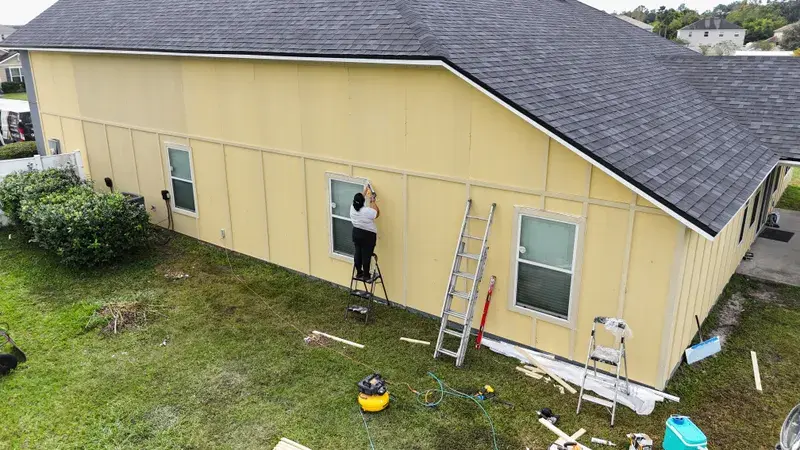
A spring roof maintenance checklist should include gutter cleaning, flashing inspection, attic moisture check, shingle condition assessment, ventilation testing, and tree trimming around the roof line. Completing these tasks before Florida's rainy season begins in May can prevent leaks, extend your roof's lifespan by years, and catch small problems before they become expensive repairs. Need help? Gimo's Roofing offers free spring roof inspections across Jacksonville and Northeast Florida. Get your free estimate.
Florida roofs take a beating. Between summer thunderstorms, winter cold fronts, constant UV exposure, and the occasional hurricane, your roof works harder than almost any other part of your home. Spring sits right in the sweet spot between winter storm season and summer rain season, making it the ideal window to inspect, clean, and repair your roof before the next round of heavy weather arrives.
This checklist covers everything you can safely do from the ground and attic, plus the items that require a professional roofing contractor. You do not need to climb on your roof to complete most of these tasks.
Why Spring Is the Best Time for Roof Maintenance
Spring in Northeast Florida brings mild temperatures, lower humidity, and relatively dry conditions compared to the summer months. This creates ideal working conditions for both homeowner inspections and professional repairs.
More importantly, spring maintenance is about timing. Florida's rainy season typically starts in late May and runs through October, delivering 60% or more of the year's total rainfall in that window. Any small vulnerability in your roof, whether it is a cracked flashing, a clogged gutter, or a lifted shingle, will be tested repeatedly by heavy afternoon thunderstorms. Finding and fixing these problems in March or April means your roof enters rainy season in the best possible condition.
Regular roof maintenance also affects your homeowner's insurance. Many Florida insurers now require proof of regular roof maintenance or recent inspection to maintain coverage, especially on older roofs. A documented spring inspection creates a paper trail that supports your coverage.
Spring Maintenance Quick Summary
- - Clean gutters and downspouts
- - Inspect shingles from ground with binoculars
- - Check attic for moisture, daylight, and pests
- - Clear debris from roof valleys and edges
- - Trim tree branches within 6 feet of roof
- - Inspect flashing around penetrations
- - Test attic ventilation
- - Schedule professional inspection if roof is 10+ years old
Ground Level Inspection
Start your spring roof check without leaving the ground. You can identify many common problems with just your eyes and a pair of binoculars.
Walk the Perimeter
Walk around your entire house and look up at the roof from all angles. You are looking for:
- Missing or damaged shingles: Gaps, tears, or shingles that are visibly curled, cracked, or buckling
- Sagging areas: Any section of the roof that appears to dip or sag, which could indicate structural problems beneath the surface
- Damaged flashing: Metal pieces around chimneys, vents, and walls that appear bent, rusted, or pulled away
- Algae or moss growth: Dark streaks or green patches, especially on north-facing slopes that get less direct sun
- Ridge line condition: Check the ridge caps along the peak for gaps, lifting, or missing pieces
Check the Fascia and Soffits
While looking up, examine the fascia boards (the vertical boards behind your gutters) and soffits (the underside panels beneath the roof overhang). Look for:
- Peeling paint or visible rot on fascia boards
- Holes or gaps in soffit panels (common entry points for raccoons and squirrels)
- Staining or discoloration that suggests water is getting behind the gutters
- Soffit vent screens that are clogged with debris or paint
Damaged fascia and soffits compromise your roof's edge protection and ventilation. If you spot rot or significant damage, Gimo's Roofing can handle both the roof and fascia/soffit repairs together.
Need Professional Help?
Gimo's Roofing offers free inspections and estimates throughout Jacksonville and Northeast Florida.
Gutter and Downspout Check
Gutters are part of your roofing system, and clogged or damaged gutters cause more roof problems than most homeowners realize. When gutters overflow, water backs up under the roof edge, soaking fascia boards and potentially wicking under shingles.
Spring Gutter Cleaning Steps
- Remove debris: Clear all leaves, pine needles, seed pods, and dirt from gutter channels. In Jacksonville, oak pollen and live oak leaves are the biggest spring culprits.
- Flush with water: Run a garden hose through the gutters and watch the flow. Water should move steadily toward downspouts without pooling.
- Check downspouts: Make sure water flows freely through each downspout. Clogs usually form at the elbow where the downspout connects to the gutter.
- Inspect for damage: Look for sagging sections, loose brackets, gaps between sections, and rust spots. Properly functioning gutters should be firmly attached and angled slightly toward downspouts.
- Check extensions: Downspout extensions should direct water at least 4 feet away from your foundation. Reattach or replace any missing extensions.
Attic Inspection
Your attic tells you more about your roof's condition than the exterior does. Many leaks and ventilation problems are only visible from inside the attic. Do this inspection on a sunny day for best visibility.
What to Look For
- Daylight through the roof deck: Turn off your flashlight and let your eyes adjust. Any pinpoints of daylight coming through the decking mean there are gaps in the roofing above. Check around the ridge, vents, and flashing areas.
- Water stains: Look for dark stains, rings, or discoloration on the underside of the decking or on rafters. These indicate past or current leaks. Yellow or brown stains on ceilings below often originate from attic leaks.
- Mold or mildew: Any fuzzy growth on wood surfaces means excess moisture. This could be from a leak or from poor ventilation trapping humid air.
- Pest activity: Look for droppings, nesting materials, chewed wood, or disturbed insulation. Spring is when raccoons and squirrels are most active nesting in attics.
- Insulation condition: Check that attic insulation is evenly distributed and not compressed, wet, or displaced. Wet insulation means an active leak.
Safety Warning
When inspecting your attic, step only on joists or a sturdy plywood walkway. Stepping on insulation between joists can put your foot through the ceiling. Use a flashlight, wear a dust mask, and be cautious of electrical wiring. If your attic is extremely hot, wait for a cooler day.
Shingle and Flashing Check
If you can safely access your roof (single-story with a low pitch), or if you prefer to use binoculars from the ground, check these items carefully.
Shingle Condition
- Granule loss: Bare patches where protective granules have worn away, exposing the black asphalt underneath. Some granule loss is normal, but widespread bare spots mean the shingles are aging out.
- Cracking or splitting: Shingles that have developed cracks from thermal cycling. This is common on older roofs and on south-facing slopes that get the most sun.
- Curling: Shingle edges that curl upward (cupping) or downward (clawing). Both indicate aging and reduce wind resistance.
- Lifted tabs: Shingle tabs that are no longer sealed to the course below. Wind can catch these lifted edges and tear shingles off.
Flashing Condition
Flashing is the metal (usually aluminum or galvanized steel) installed where the roof meets walls, chimneys, vents, skylights, and valleys. According to the types of roof flashing guide, these are the most leak-prone areas on any roof.
- Check that flashing is firmly attached and sealed at all edges
- Look for rust, especially on galvanized steel flashing
- Ensure caulk or sealant around flashing edges is intact and not cracked
- Chimney flashing is especially prone to separation where the metal meets the masonry
Ventilation Check
Proper roof ventilation is critical in Florida. Without it, attic temperatures can exceed 150 degrees in summer, cooking your shingles from underneath and creating moisture problems. Spring is the right time to make sure your ventilation is working before summer heat arrives.
- Check soffit vents: Make sure they are not blocked by insulation, debris, paint, or wasp nests. Each soffit vent should allow free airflow into the attic.
- Check ridge vents: From the attic, you should feel slight air movement near the ridge. If the ridge feels stagnant, the ridge vent may be blocked or the cap may have sealed over the vent opening.
- Check powered ventilators: If you have attic fans, turn them on and verify they are running properly. Replace any that are noisy, vibrating excessively, or not moving air.
- Temperature test: On a warm spring day, the attic temperature should be within 10 to 15 degrees of the outside temperature. A significantly hotter attic indicates poor ventilation.
Tree and Debris Cleanup
Trees are one of the biggest threats to Florida roofs. Overhanging branches drop leaves that clog gutters, scratch shingles, and create shade that promotes algae growth. During storms, branches can break and cause direct impact damage.
Spring Tree Maintenance for Roof Protection
- Trim branches back to 6 feet from the roof: This is the minimum clearance recommended by most roofing manufacturers. Branches closer than 6 feet can scratch shingles in wind and provide a bridge for squirrels and raccoons to access your roof.
- Remove dead branches: Dead wood is the first to break in storms. Remove dead branches from any tree that could reach your roof or power lines if it fell.
- Clear debris from valleys: Roof valleys (the V-shaped channels where two slopes meet) collect leaves, pine needles, and other debris. This creates dams that trap water and accelerate deterioration of valley flashing and shingles.
- Clean around roof penetrations: Clear leaves and debris from around vent pipes, skylights, and satellite dishes. Debris traps moisture against flashing and sealant, speeding up deterioration.
When to Call a Professional
While you can handle many checklist items yourself, certain situations call for a professional roofing inspection.
- Your roof is 10+ years old: An annual professional inspection becomes more important as your roof ages. A professional roof inspection in Florida covers things you cannot safely assess from the ground.
- You found signs of leaks: Water stains in the attic, ceiling stains, or musty odors need professional diagnosis. The source of a leak is often far from where the water appears.
- Your roof took storm damage: After any significant storm, even if your roof looks fine from the ground, wind and hail damage can be hidden. Storm damage is often invisible from ground level.
- You are considering selling: A documented professional inspection gives you and buyers confidence in the roof's condition.
- Insurance requires it: More Florida insurers are requiring roof inspections on homes over 15 years old to maintain or renew policies.
Gimo's Roofing offers free roof inspections throughout the Jacksonville area, including Ponte Vedra Beach, St. Augustine, Orange Park, and Fernandina Beach. Call (904) 606-5313 to schedule your spring inspection before the summer rains arrive or get a free estimate online.
Get a Free Roofing Estimate
Instant online pricing or schedule an in-person assessment. Financing available from $99/month.
You Might Also Read
- Spring Roof Maintenance Checklist - Seasonal guide
- Roof Algae Removal - Clean your roof safely
- How Long Does a Roof Last? - Lifespan by material
Key Takeaways: Spring Roof Maintenance
- - March and April are the ideal months for roof maintenance in Florida
- - Start from the ground with binoculars before going near the roof
- - Clean gutters to prevent water backup under the roof edge
- - Inspect the attic for moisture, daylight, pests, and mold
- - Trim trees to maintain 6+ feet clearance from the roof
- - Schedule a professional inspection for roofs over 10 years old
Do not wait until you see water stains on your ceiling to think about your roof. A few hours of spring maintenance protects your home through the entire rainy season and can save you thousands in emergency repairs later. Gimo's Roofing is here to help with any issues your spring inspection uncovers.