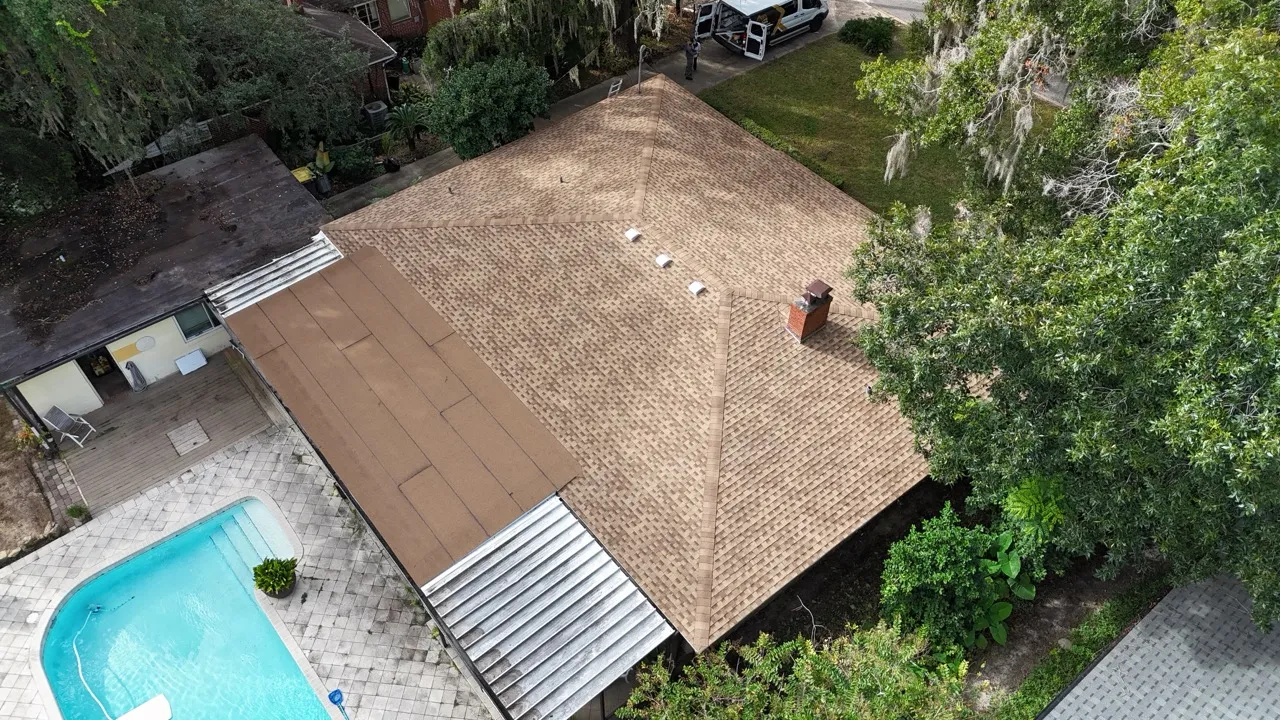
Florida roofs typically last 15-50+ years depending on the material. Asphalt shingles last 15-20 years, significantly shorter than northern states due to intense UV exposure and hurricane stress. Metal roofs last 40-60 years. Tile roofs can exceed 50 years with proper maintenance. Whether you are planning a roof replacement or just trying to understand how much life your current roof has left, this guide covers everything Jacksonville homeowners need to know about roof lifespan in Florida's demanding climate.
Quick Answer - Florida Roof Lifespans
- 3-Tab Asphalt Shingles: 12-15 years in Florida
- Architectural Shingles: 15-20 years in Florida
- Premium Impact-Rated Shingles: 20-25 years in Florida
- Standing Seam Metal: 40-60 years
- Aluminum Metal: 50-70 years
- Clay Tile: 50-100+ years
- Concrete Tile: 40-60 years
- Flat/TPO Membrane: 15-25 years
How Long Do Florida Roofs Last
Florida's climate is the toughest roofing environment in the continental United States. The combination of intense UV radiation that breaks down materials at the molecular level, relentless humidity that promotes moisture-related damage, salt air that accelerates corrosion along the coast, and hurricane-force winds that stress every connection point means roofs here simply do not last as long as they do in milder climates. A roof that lasts 30 years in Ohio will typically last only 15-20 years in Jacksonville.
This is not a quality issue or an installation problem. It is physics. Florida's UV index averages 8-10 during summer months, among the highest in the nation. That UV energy breaks down the petroleum-based compounds in asphalt shingles, degrades the rubber seals around pipe boots and vents, and chalks paint finishes on metal roofing. Understanding these realities helps you plan and budget realistically rather than being surprised when your "30-year shingle" needs replacement at year 18.
The good news is that choosing the right material, ensuring proper installation, and maintaining your roof consistently can help you maximize the lifespan of whatever roofing system you choose. And when the time does come for replacement, knowing the expected lifespan helps you evaluate whether repair or replacement is the smarter financial move.
Not Sure How Much Life Your Roof Has Left?
Gimo's Roofing offers free roof inspections throughout Jacksonville. We will give you an honest assessment of your roof's remaining lifespan with no pressure and no sales pitch.
How Long Do Asphalt Shingles Last in Florida
Asphalt shingles are the most common roofing material in Jacksonville, installed on roughly 80% of residential homes. They are popular because they deliver good performance at an affordable price point, come in dozens of colors and styles, and are readily available from every supplier. However, Florida's climate takes a significant toll on asphalt shingles compared to what homeowners in northern states experience.
Expected Lifespans by Shingle Type
- 3-Tab Shingles: 12-15 years in Florida (vs. 20-25 years in northern states). These single-layer shingles are the thinnest and most vulnerable to Florida's UV. Their lower wind ratings (60-70 mph) also make them more susceptible to storm damage. Most roofing contractors, including Gimo's Roofing, no longer recommend 3-tab for Florida homes. See our full comparison of architectural vs 3-tab shingles
- Architectural Shingles: 15-20 years in Florida (vs. 25-30 years elsewhere). These laminated, dimensional shingles are thicker, heavier, and carry higher wind ratings (110-130 mph). They are the current industry standard and the minimum quality level Gimo's Roofing recommends for Jacksonville homes
- Premium/Designer Shingles: 20-25 years in Florida (vs. 30-40 years elsewhere). These top-tier products use SBS-modified asphalt that stays flexible longer in heat, carry Class 4 impact ratings, and often qualify for insurance premium discounts
Why Shingles Fail Faster in Florida
Three primary factors accelerate shingle deterioration in Florida, and understanding them helps explain why even premium shingles have a shorter lifespan here than their manufacturer warranty might suggest.
UV degradation is the biggest factor. Florida receives more annual UV radiation than nearly any other state. That UV energy breaks down the petroleum-based oils that keep asphalt shingles flexible and waterproof. As these oils evaporate, shingles become brittle, crack, and lose their ability to shed water. The ceramic granules on the shingle surface protect against UV, but once granule loss begins, the degradation accelerates rapidly. South-facing and west-facing roof slopes, which receive the most direct sun, always age faster than north-facing slopes on the same home.
Thermal cycling compounds the UV damage. Jacksonville roof surfaces can swing from 70 degrees at dawn to over 160 degrees by mid-afternoon on a summer day, then cool again at night. This daily expansion and contraction loosens nails, breaks the tar seal strips that hold shingles together, and creates micro-cracks that grow over time. Over thousands of these cycles across 15-20 years, even well-installed shingles fatigue and fail.
Hurricane and storm stress accelerates the timeline further. Even a storm that does not visibly damage your roof still stresses every shingle, nail, and seal point. Wind flowing over a roof creates uplift pressure that tugs at shingle edges. Heavy rain tests every flashing joint and seal. After each significant storm season, your roof has measurably less remaining life, even if it looks the same from the ground. This is why annual professional roof inspections are so important in Florida.
For a much deeper dive into shingle degradation, read our dedicated guide on asphalt shingle lifespan in Florida.
You Might Also Read
- Asphalt Shingle Lifespan in Florida - Detailed breakdown by shingle grade
- Best Roofing Materials for Florida Homes - Complete material comparison
- Shingle Granule Loss Causes - Why your shingles are losing granules
How Long Do Metal Roofs Last in Florida
Metal roofing is increasingly popular in Florida because it outlasts asphalt shingles by decades and handles hurricane winds exceptionally well. A standing seam metal roof installed today on a Jacksonville home may be the last roof that home ever needs. While the upfront cost is 2-3x higher than shingles, the per-year cost is often lower because you avoid multiple replacement cycles over a 50-year span.
Metal Roof Lifespans by Type
- Standing Seam (Aluminum): 50-70 years. The best choice for coastal Jacksonville properties in Jacksonville Beach, Ponte Vedra, and Fernandina Beach because aluminum does not rust even in direct salt spray
- Standing Seam (Steel): 40-60 years with Galvalume coating and Kynar paint finish. Excellent for inland Jacksonville neighborhoods
- Metal Shingles: 30-50 years. Combines metal durability with a traditional shingle appearance
- Corrugated/Screw-Down Panels: 25-40 years. More affordable but exposed screws need maintenance every 10-15 years
Metal roofs reflect solar radiation rather than absorbing it, reducing cooling costs by 10-15% in Jacksonville's long, hot summers. They carry wind ratings of 140-180 mph when properly installed with concealed clips. For a complete cost-vs-lifespan analysis, read our detailed metal roof vs shingles comparison for Florida and our complete metal roof lifespan guide.
How Long Do Tile Roofs Last in Florida
Clay and concrete tile roofs are the longest-lasting option for Florida homes. You will see them throughout St. Augustine, San Marco, Ponte Vedra Beach, and other areas with Mediterranean, Spanish, and upscale architectural styles.
- Clay Tiles: 50-100+ years. Clay is essentially baked earth, making it nearly indestructible against UV, moisture, and insects. Some European clay tile roofs have survived over 200 years
- Concrete Tiles: 40-60 years. More affordable than clay with similar durability, though concrete is heavier and more prone to color fading over decades
The important caveat with tile roofs is that while the tiles themselves last decades, the underlayment beneath them typically needs replacement every 20-25 years. This means a partial roof project where tiles are carefully removed, stored, new underlayment is installed, and the tiles are reinstalled. This costs significantly less than a full tile replacement but is still a major project. Also, tile roofs weigh 600-1,100 pounds per 100 square feet, so not all home structures can support them without reinforcement. Our tile roofing contractor page has more details.
Flat and Low-Slope Roofing Systems
If your home or commercial building has a flat or low-slope roof, you are using membrane systems rather than shingles or tile. TPO membranes last 15-25 years, EPDM rubber roofing lasts 20-25 years, and modified bitumen lasts 15-20 years. Proper drainage is critical for these systems since standing water dramatically shortens their lifespan. See our flat roof options guide for Florida.
Planning a Roof Replacement?
Get an instant ballpark estimate based on your actual roof size. No phone call required.
Get Free Instant EstimateWhat Factors Affect Your Roof's Lifespan in Florida
Two identical roofs installed on the same day on neighboring Jacksonville homes can have vastly different lifespans. The material sets the baseline, but these factors determine whether your roof reaches the top or bottom of its expected range.
Installation Quality
The quality of installation is the single most controllable factor in roof lifespan. A properly installed roof can last 3-5 years longer than a poorly installed one using identical materials. Critical installation details include correct nail placement and quantity (too few nails means blow-offs, too many means cracked shingles), proper starter strip application at the eaves and rakes, adequate flashing at every penetration and transition point, correct underlayment selection and overlap, and proper ridge cap installation. This is why choosing a qualified roofing contractor matters so much. A cheap installation with premium shingles will underperform a quality installation with standard shingles every time.
Attic Ventilation
Poor attic ventilation is the number one cause of premature roof failure in Florida. Without proper airflow through soffit intake vents and ridge exhaust vents, attic temperatures can exceed 150 degrees in summer. This superheats your roof decking and shingles from below while the sun bakes them from above, essentially cooking them from both sides. The result is accelerated granule loss, brittle shingles, and shortened lifespan. Proper attic insulation and ventilation can extend roof life by 5+ years, making it one of the best investments you can make for long-term roof performance.
Roof Color and Sun Exposure
Darker roofs absorb significantly more solar heat than lighter roofs. A black shingle roof surface can reach 180 degrees on a summer day while a light gray roof stays around 130 degrees. That 50-degree difference translates to faster material degradation. South-facing and west-facing roof slopes receive the most direct UV and typically show wear before north-facing slopes on the same home. If you are choosing a new roof, light and medium roof colors or cool roof shingles with reflective granules can extend shingle life by 2-3 years in Florida while also reducing cooling costs.
Tree Coverage and Debris
Trees create a paradox for roof lifespan. Shade from trees reduces UV exposure and surface temperatures, which extends material life. But overhanging branches drop leaves, pine needles, and debris that trap moisture, promote algae and moss growth, and can scratch or damage roofing during storms. The ideal situation is trees that shade your roof without overhanging it directly. Keep branches trimmed at least 6 feet from your roof surface. Jacksonville's abundant live oaks and pine trees make regular gutter cleaning essential, as clogged gutters cause water backup that damages both the roof edge and fascia boards.
Coastal Salt Air Exposure
Homes within 15 miles of the Atlantic coast face accelerated corrosion from salt-laden air. This is less of a concern for asphalt shingles (which do not corrode) but significantly affects metal roofing, flashing, and fasteners. Steel roofing components near the coast should use Galvalume or aluminum substrates rather than bare galvanized steel. If you live near Jacksonville Beach or Ponte Vedra, discuss coastal-grade materials with your contractor.
You Might Also Read
- Roof Maintenance Tips for Florida Homeowners - Maximize your roof's lifespan with these habits
- Why Roof Ventilation Matters in Florida - The #1 factor in premature roof failure
- Energy-Efficient Roofing for Florida - Materials that save on cooling costs
How to Extend Your Roof's Lifespan in Florida
You cannot stop Florida's climate from affecting your roof, but you can significantly extend its useful life with consistent maintenance and proactive care. These six steps can add 5-10 years to any roofing material's lifespan in our climate.
- Get annual professional inspections. Have a licensed roofer inspect your roof yearly, ideally before hurricane season begins in June. A professional catches problems, cracked pipe boots, lifted flashing, deteriorating sealant, that are invisible from the ground. Catching a $200 repair early prevents a $2,000 problem later. Gimo's Roofing offers free roof inspections throughout Jacksonville
- Keep your roof clean. Remove debris, leaves, and pine needles that trap moisture against the roof surface. Black algae streaks are not just ugly, the algae organisms actually feed on the limestone filler in shingle granules, accelerating granule loss. Professional roof cleaning or algae-resistant shingles prevent this damage
- Maintain your gutters. Clogged gutters cause water to back up under the roof edge, damaging shingles, underlayment, and fascia boards. Clean gutters at least twice per year, more often if you have heavy tree cover. Consider gutter guards to reduce debris accumulation
- Ensure proper attic ventilation. If your attic is excessively hot (you can feel it when you open the attic access hatch), consider adding ventilation. Ridge vents paired with soffit intake vents create passive airflow that removes heat and moisture. This is one of the best investments you can make for extending roof life in Florida
- Trim overhanging trees. Keep branches at least 6 feet from your roof surface to reduce debris, improve air circulation, prevent storm damage from falling limbs, and discourage animal access to your roof
- Address repairs immediately. A small leak today becomes rotted decking tomorrow and a sagging roof next year. Delaying repairs always costs more in the long run. If you notice water stains on your ceiling or leaks during heavy rain, call a roofer before the damage spreads
For a complete seasonal guide, check out our Florida roof maintenance checklist and our year-round maintenance tips.
When Should You Replace Your Florida Roof
Knowing when to stop repairing and start replacing saves money in the long run. Continued repairs on a failing roof are like putting new tires on a car with a cracked engine block. At some point, the system has reached the end of its useful life and further repairs are throwing money at a lost cause.
Consider roof replacement when you see any of these warning signs:
- Age threshold: Your roof has reached 80% of its expected lifespan (16+ years for architectural shingles in Florida)
- Multiple recurring leaks: You are calling for leak repairs in different areas, signaling systemic failure rather than isolated problems
- Widespread granule loss: Shingles are bald or your gutters are full of granules after every rain
- Curling, buckling, or cracking: Shingles are visibly warped, lifted, or breaking apart
- Daylight visible in attic: Light coming through the roof deck means water can enter too
- Sagging roofline: Structural deflection indicates decking or framing damage from prolonged water intrusion
- Insurance pressure: Your insurer is threatening non-renewal or requiring replacement due to roof age. Read about what to do when insurance drops you over your old roof and whether insurance covers a 20-year-old roof
- Repair costs exceeding 30-50% of replacement: When cumulative or needed repairs approach half the cost of a new roof, replacement delivers dramatically better value
Gimo's Roofing provides honest assessments. If your roof has years of life left, we will tell you. If replacement is the smarter move, we will explain exactly why and provide detailed pricing. Roof replacement in Jacksonville starts at $7,900 for average-sized homes, with financing available from $99/month. The best time to replace is before an emergency forces your hand.
Ready to Plan Your Roof Replacement?
Get an instant online estimate or call for a free in-person assessment.
Key Takeaways - Florida Roof Lifespans
- - Asphalt shingles last 15-20 years in Florida, 5-10 years less than in cooler states
- - Metal roofs last 40-70 years and handle hurricanes exceptionally well
- - Tile roofs can exceed 50-100 years but need underlayment replacement at 20-25 years
- - Proper attic ventilation can extend any roof's life by 5+ years
- - Installation quality matters as much as material choice for longevity
- - Annual professional inspections catch problems early and maximize lifespan
- - Light-colored or cool roof shingles last 2-3 years longer than dark colors in Florida
- - Consider replacement when repair costs exceed 30-50% of a new roof's cost
You Might Also Read
- Roof Replacement Cost in Jacksonville FL for 2026 - Complete pricing guide by material
- Roof Repair vs Replacement - When to repair and when to replace
- Roof Warranty Guide for Florida - What warranties actually cover
- How to Choose a Roofing Contractor - Find quality contractors in Jacksonville
Need to know how much life your Florida roof has left? Contact Gimo's Roofing for a free inspection. We serve Jacksonville, Orange Park, Mandarin, Nocatee, St. Augustine, and all of Northeast Florida. Call (904) 606-5313 to schedule your free assessment.