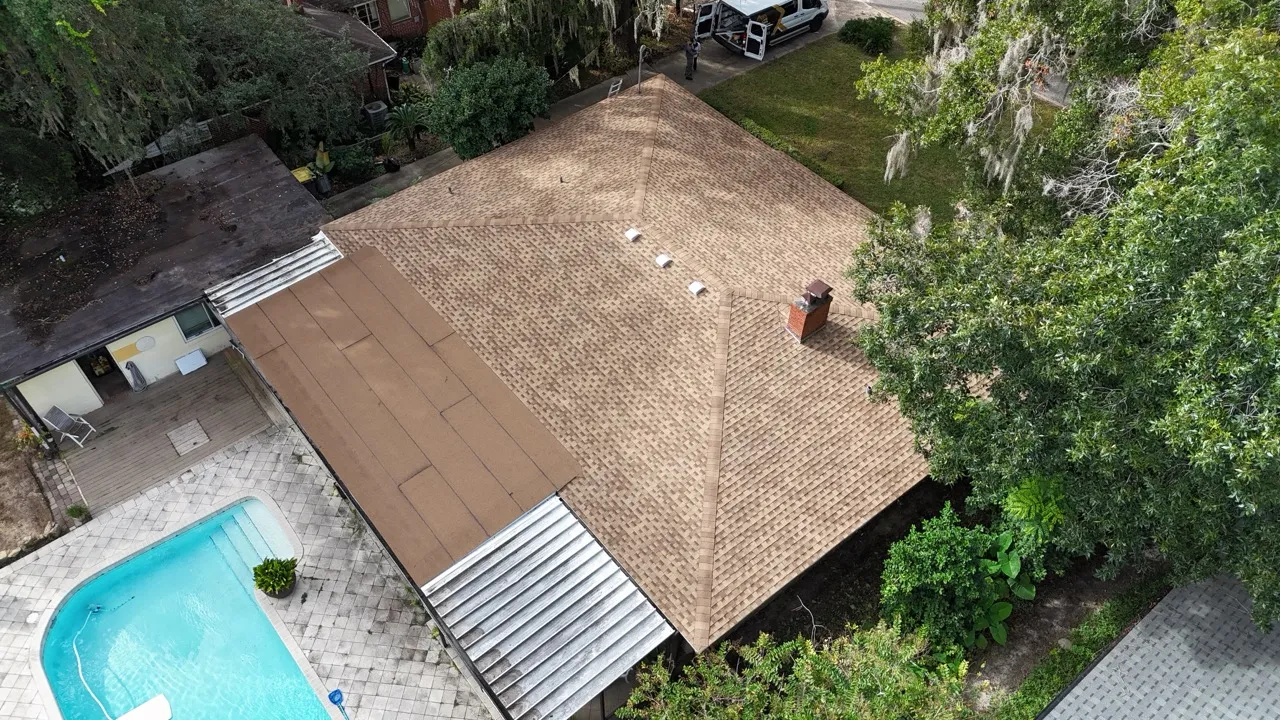
Asphalt shingles last 15-20 years in Florida, compared to 25-30 years in northern states. If you are a Jacksonville homeowner with an asphalt shingle roof, understanding this Florida-specific reality helps you plan for roof replacement, budget appropriately, and take steps to maximize the life of your current roof. This guide covers the realistic lifespan of every shingle type in Florida, why our climate is so tough on shingles, the warning signs that replacement is approaching, and proven strategies to extend your roof's useful life.
Quick Answer - Florida Asphalt Shingle Lifespans
- 3-Tab Shingles: 12-15 years in Florida
- Architectural Shingles: 15-20 years in Florida
- Premium/Designer Shingles: 20-25 years in Florida
- Impact-Resistant Shingles: 18-25 years in Florida
How Long Do Asphalt Shingles Last in Florida
If you are a Jacksonville homeowner with an asphalt shingle roof, you need to understand that manufacturer warranties do not tell the whole story. A shingle labeled "Lifetime" or "30-year" will not last that long in Florida. These warranty durations are based on testing in moderate climates, not under Florida's punishing combination of UV radiation, heat, humidity, and hurricane winds.
The realistic expectation for asphalt shingles in Northeast Florida is 15-20 years for quality architectural shingles properly installed with adequate ventilation. Budget 3-tab shingles may fail in as little as 10-12 years, while premium products with SBS-modified asphalt might stretch to 22-25 years under ideal conditions. The difference between reaching the top or bottom of these ranges comes down to installation quality, ventilation, maintenance, and a bit of luck with hurricane seasons.
Understanding your shingle's realistic lifespan in Florida is critical for financial planning. If you know your architectural shingle roof was installed 14 years ago, you should be actively budgeting for replacement within the next 3-6 years rather than being caught off guard by a sudden failure. For current replacement pricing in Jacksonville, shingle roofs start at $7,900 with financing from $99/month.
Lifespan by Shingle Type in Florida
Not all asphalt shingles are created equal. The grade of shingle you choose has a direct impact on how many years you get out of your roof in Florida. Here is what Jacksonville homeowners can realistically expect from each type, based on our experience installing and inspecting thousands of roofs in Northeast Florida.
3-Tab Shingles - 12-15 Years in Florida
3-tab shingles are the most basic and affordable asphalt shingle. They consist of a single layer of fiberglass mat coated with asphalt and topped with granules, with cutouts that create three flat tabs per strip. In Florida, 3-tab shingles are the shortest-lived option because their thin, single-layer construction offers minimal resistance to UV degradation and thermal stress. Their lower wind ratings (typically 60-70 mph) also make them more vulnerable to blow-offs during tropical storms and hurricanes. Most roofing contractors in Jacksonville, including Gimo's Roofing, no longer recommend 3-tab shingles for Florida homes because the small upfront savings are erased by the shorter lifespan. The cost difference between 3-tab and architectural is typically only $1-2 per square foot, but the lifespan difference is 3-5 years.
Architectural Shingles - 15-20 Years in Florida
Architectural shingles, also called dimensional or laminated shingles, are the current industry standard and the most popular choice in Jacksonville. They are made from two or more layers of fiberglass mat laminated together, creating a thicker, heavier shingle with a textured, dimensional appearance. The additional thickness provides measurably better UV resistance, and the laminated construction delivers wind ratings of 110-130 mph, which is critical in Florida. Architectural shingles hit the sweet spot of cost, performance, and appearance for most Jacksonville homeowners. They come in the widest selection of colors and styles, and their dimensional profile creates shadow lines that add curb appeal. Read our detailed comparison of architectural vs 3-tab shingles for the full breakdown.
Premium and Designer Shingles - 20-25 Years in Florida
Premium shingles represent the top tier of asphalt roofing. Products like GAF Grand Canyon, CertainTeed Grand Manor, and Owens Corning Duration Designer use the heaviest weight class, the thickest construction, and often incorporate SBS-modified asphalt that stays flexible longer in Florida's heat. SBS (styrene-butadiene-styrene) is a rubber-like polymer blended into the asphalt that allows the shingle to flex rather than crack under thermal cycling, extending its useful life by several years. Premium shingles carry the highest wind ratings (up to 150 mph) and enhanced algae-resistant granules. They are the best choice for homeowners who plan to stay in their home long-term and want the maximum lifespan from an asphalt product.
Impact-Resistant Shingles - 18-25 Years in Florida
Class 4 impact-resistant shingles are specifically engineered to withstand hail, wind-blown debris, and physical impact without cracking. They use modified asphalt formulations that flex on impact rather than shattering. In Florida, these shingles often qualify for significant insurance premium discounts, sometimes $500-$2,000+ per year, which can offset their higher cost within a few years. The modified asphalt also provides better thermal cycling resistance, contributing to the longer lifespan. If you are comparing impact-rated products to standard architectural shingles, factor in the insurance savings when evaluating the true cost difference.
You Might Also Read
- Architectural vs 3-Tab Shingles - Detailed cost and performance comparison
- What Is a Composition Roof? - Understanding asphalt shingle grades
- How Many Shingles in a Bundle? - Roofing math made simple
Why Do Asphalt Shingles Fail Faster in Florida
Understanding why Florida destroys asphalt shingles faster than anywhere else helps you make smarter decisions about materials, maintenance, and replacement timing. Four primary factors work together to shorten shingle lifespan in our state.
Intense UV Radiation
Florida receives more annual UV radiation than nearly any other state. Jacksonville's UV index averages 8-10 during summer months, putting it in the "very high" category for months at a time. This UV energy targets the petroleum-based oils that keep asphalt shingles flexible and waterproof. As these oils evaporate under constant UV bombardment, shingles become progressively more brittle. You can see this process in action by comparing a new shingle, which is flexible enough to bend without breaking, to a 15-year-old Florida shingle that snaps like a dry cracker. The ceramic granules embedded in the shingle surface serve as a UV sunscreen, reflecting radiation away from the asphalt. Once granule loss begins, whether from aging, storm damage, or foot traffic, the exposed asphalt degrades at an accelerated rate. This is why granule loss is such an important warning sign.
Daily Thermal Cycling
Jacksonville's daily temperature swings create a punishing expansion-contraction cycle that stresses every component of the roofing system. A roof surface might be 70 degrees at dawn and over 160 degrees by mid-afternoon, then cool back down at sunset. Each cycle loosens the adhesive tar strips that bond overlapping shingles together, creates micro-cracks in the asphalt that grow over time, causes nail pops as the decking beneath expands and contracts at a different rate than the shingles, and stresses the flashing sealant at every transition point. Over thousands of these cycles across 15-20 years, even well-installed shingles fatigue and fail. This is why proper attic ventilation matters so much. Reducing attic temperatures moderates the thermal cycling effect from below.
Humidity, Rain, and Biological Growth
Jacksonville averages 74% relative humidity and over 52 inches of rain annually. This constant moisture promotes algae and moss growth on shingle surfaces, which appears as dark black or green streaks. These organisms are not just cosmetic problems. The most common roof algae, Gloeocapsa magma, actually feeds on the limestone filler used in shingle granules, literally eating your roof's UV protection layer. Heavy rainfall also tests waterproofing at every flashing joint, valley, and edge condition, and the constant wet-dry cycling promotes deterioration of sealants and adhesives that keep the system watertight.
Hurricane and Storm Stress
Even when your roof survives a hurricane or tropical storm without visible damage, high winds create uplift forces that stress the tar seal strips bonding shingles together and can microscopically lift shingle edges. Heavy rain driven by wind tests every penetration and flashing joint under conditions they rarely face during normal weather. This cumulative stress reduces remaining lifespan even when the roof appears undamaged from the ground. This is why annual professional inspections after storm season are essential for catching hidden damage before it becomes a major problem.
Worried About Your Shingle Roof's Condition?
Gimo's Roofing offers free roof inspections throughout Jacksonville. We will assess your shingles honestly and tell you whether you have years left or should start planning for replacement.
Signs Your Asphalt Shingles Need Replacing
Do not wait for active leaks to tell you your roof is failing. By the time water is dripping through your ceiling, the underlayment has already failed and the decking may have water damage, adding cost to your eventual replacement. Watch for these earlier warning signs that your shingles are approaching end of life.
- Granule loss: Check your gutters after rain. A steady accumulation of granules, the sandpaper-like coating on the shingle surface, means the UV protection layer is eroding. Some granule loss is normal on brand-new shingles (manufacturing residue), but heavy granule loss on a roof older than 10 years signals the shingles are approaching failure. Look for bare, dark patches on the roof where granules have worn away completely
- Curling or cupping: When shingle edges curl upward (sometimes called "fishmouthing") or the center of the shingle cups downward, the asphalt has lost its flexibility and moisture has infiltrated the fiberglass mat. Curled shingles catch wind easily and blow off during storms
- Cracking: Visible cracks running across the shingle surface mean the asphalt has completely dried out and lost all flexibility. Cracked shingles cannot seal against water and will leak during heavy rain
- Missing shingles: If shingles are blowing off during moderate winds (not just hurricane force), the adhesive strips have failed across the entire roof, not just the area where shingles are missing. The visible damage is the tip of the iceberg
- Bald spots: Areas where granules are completely gone expose the raw asphalt to direct UV, which causes rapid deterioration of those areas. Bald spots often appear first on south-facing and west-facing slopes
- Age past 15 years: If your shingle roof is 15+ years old in Florida, start planning for replacement even if you do not see visible problems. The deterioration is often happening at the underlayment and seal strip level before it becomes visible on the shingle surface
- Interior water stains: Brown or yellow ceiling stains indicate water has already penetrated the roof system. This is an urgent signal that requires immediate professional attention
For a more complete checklist with photos, read our guide on signs you need a new roof in Florida. If you are seeing multiple warning signs, our repair vs replacement guide helps you decide whether targeted repairs or full replacement is the smarter investment at this point.
How to Maximize Your Shingle Roof's Lifespan in Florida
While you cannot change Florida's climate, you can take deliberate steps to get the maximum possible life from your asphalt shingle roof. The difference between a roof that lasts 12 years and one that lasts 22 years on the same Jacksonville street often comes down to these maintenance and design choices.
- Ensure proper attic ventilation. This is the single most impactful factor you can control. Inadequate ventilation allows attic temperatures to exceed 150 degrees in summer, cooking shingles from below while the sun bakes them from above. Proper balanced ventilation with soffit intake and ridge exhaust can extend shingle life by 5+ years. If your attic feels excessively hot when you open the access hatch in summer, you likely need more ventilation
- Choose light-colored shingles. Light and medium-colored shingles reflect more solar radiation and run 30-50 degrees cooler at the surface than dark colors. This reduced heat stress translates to 2-3 additional years of lifespan. If you prefer a darker look, cool roof shingles with reflective granules offer a compromise
- Keep the roof clean. Remove debris promptly and address algae and moss before it damages the granule layer. When choosing new shingles, specify algae-resistant products with copper-infused granules. Professional roof cleaning every few years removes biological growth that shortens shingle life
- Maintain gutters and drainage. Clogged gutters cause water to back up under the roof edge, damaging shingles, underlayment, and fascia boards. Clean gutters at least twice per year. Homes with heavy tree cover may need quarterly cleaning or gutter guards
- Trim overhanging trees. Keep branches at least 6 feet from the roof surface to reduce debris accumulation, improve air circulation, prevent branch-scraping damage during storms, and discourage animal access
- Get annual professional inspections. A licensed roofer can spot problems invisible from the ground: cracked pipe boots, deteriorating flashing sealant, lifted shingle edges, and early granule loss patterns. Catching a $200 repair early prevents a $2,000 problem later. Schedule inspections before hurricane season each year
- Invest in quality installation. The best shingles will fail prematurely if installed by an inexperienced crew. Correct nail placement, proper starter strips, adequate underlayment overlap, and precise flashing work are the foundation of a long-lasting roof. Choosing a qualified contractor is not where you want to save money
Planning for Shingle Roof Replacement?
Get an instant ballpark estimate based on your actual roof size, or call for a free in-person assessment.
Should You Switch from Shingles to Metal or Tile
When your asphalt shingle roof reaches the end of its life, you have the opportunity to switch to a longer-lasting material. Metal roofing lasts 40-60 years in Florida, potentially eliminating future re-roofing cycles entirely. Clay tile can last 50-100+ years. While both cost more upfront, their per-year cost is often lower than shingles when you factor in multiple replacement cycles over a 50-year span.
However, shingles remain the right choice for many homeowners. If you are planning to sell within 10 years, if budget is a primary concern, or if your HOA restricts material choices, quality architectural shingles deliver excellent value. For a comprehensive comparison, read our best roofing materials for Florida guide and our complete Florida roof lifespan guide.
Key Takeaways - Asphalt Shingle Lifespan in Florida
- - 3-tab shingles last 12-15 years in Florida and are no longer recommended
- - Architectural shingles last 15-20 years and offer the best value for most homeowners
- - Premium shingles with SBS-modified asphalt can reach 20-25 years
- - UV radiation is the primary killer of asphalt shingles in Florida
- - Proper attic ventilation is the single most impactful lifespan factor you control
- - Light-colored shingles last 2-3 years longer than dark colors in Florida
- - Start planning replacement at 15 years even without visible problems
- - Annual inspections catch problems early and maximize your roof's useful life
You Might Also Read
- Roof Replacement Cost in Jacksonville FL - 2026 pricing by material and home size
- How Long Does a Roof Last in Florida? - Lifespan for all materials, not just shingles
- Metal Roof vs Shingles in Florida - Is switching to metal worth it?
- Roof Warranty Guide for Florida - What warranties actually cover
Wondering how much life your shingle roof has left? Gimo's Roofing offers free inspections throughout Jacksonville, Orange Park, Mandarin, Nocatee, St. Augustine, and all of Northeast Florida. We will assess your roof's condition honestly and help you plan, whether that means maintenance to extend its life or replacement starting at $7,900. Call (904) 606-5313 to schedule your free assessment.