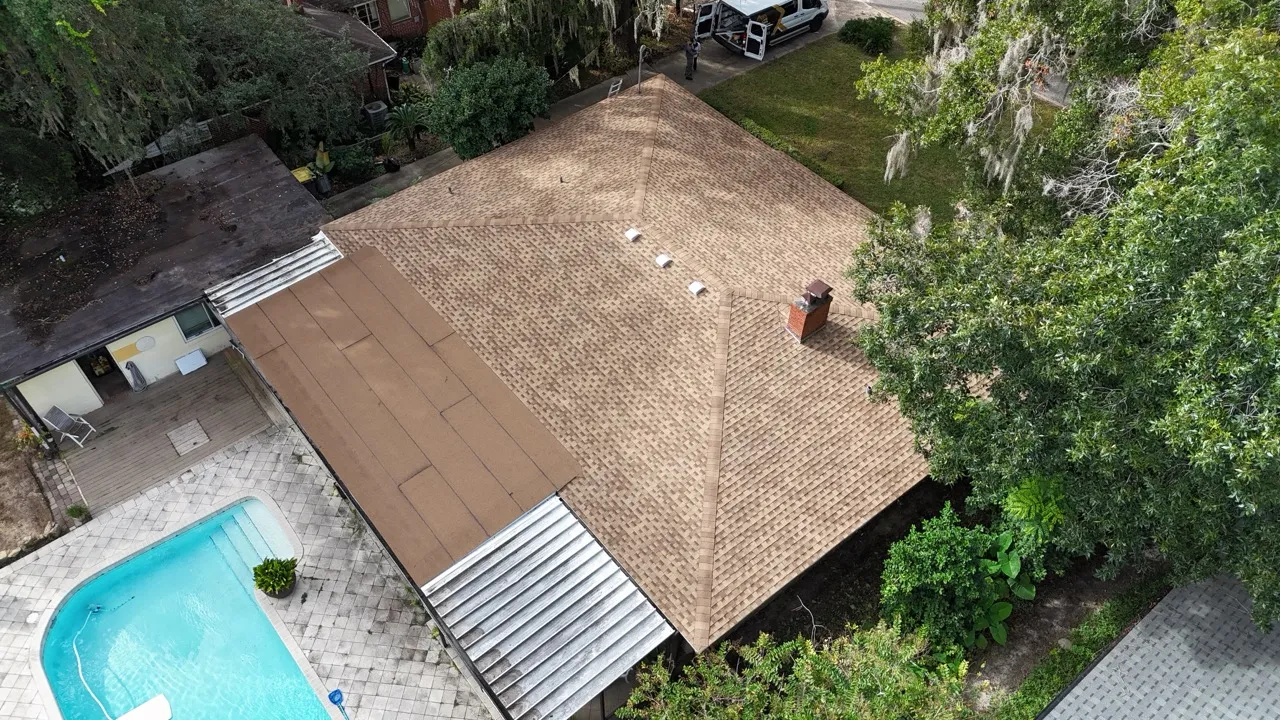
A composition roof (also called a composite roof) is any roofing system made from a mixture of materials rather than a single natural material. The most common type is asphalt composition shingles, which consist of a fiberglass mat coated with asphalt and topped with ceramic mineral granules. The term "composition" refers to the composite nature of multiple materials combined into one product. If you have ever searched "what is a composition roof" and felt confused by overlapping terminology, you are not alone. This guide from Gimo's Roofing breaks down everything you need to know about composition roofing, from the materials involved to cost, lifespan, and why it remains the most popular residential roofing choice in Florida and across the United States.
Composition roofing accounts for roughly 80 percent of all residential roofs in America. Its popularity is easy to understand once you see the full picture. It is affordable, available in dozens of colors and styles, straightforward to install, and performs well across a wide range of climates. For Florida homeowners specifically, understanding composition roofing is essential because most homes in Jacksonville, St. Augustine, Orange Park, and the surrounding areas already have some form of composition shingle on them. Whether you are planning a roof replacement or simply trying to understand what is currently on your house, Gimo's Roofing is here to walk you through every detail.
What Is a Composition Roof
A composition roof is a roof covered with shingles that are manufactured from a combination of different materials. Unlike natural roofing materials such as slate, wood shake, or clay tile, which are each made from a single raw material, composition shingles blend multiple components together to create a product that is durable, weather-resistant, and cost-effective.
The standard composition shingle has three primary layers. The first is a fiberglass base mat. This mat provides structural integrity and dimensional stability while remaining lightweight. The second layer is an asphalt coating that is applied to both sides of the fiberglass mat. This asphalt waterproofs the shingle and helps it adhere to the roof surface through heat activation during installation. The third layer consists of ceramic mineral granules that are embedded into the top surface of the asphalt coating. These granules serve multiple purposes. They protect the asphalt from ultraviolet radiation, provide fire resistance, and give the shingle its color and visual texture.
Some composition shingles include additional components. Algae-resistant granules containing copper or zinc are common in products designed for humid climates like Florida. Some premium lines incorporate SBS (styrene-butadiene-styrene) modified asphalt, which makes the shingle more flexible and resistant to thermal cycling. Impact-resistant composition shingles may include a polymer-modified core for enhanced hail and debris resistance.
Composition Roof at a Glance
- - Base material: Fiberglass mat
- - Waterproofing layer: Asphalt coating
- - Protective surface: Ceramic mineral granules
- - Optional additives: Algae-resistant granules, SBS-modified asphalt, polymer impact cores
- - Other names: Composite roof, asphalt shingle roof, comp roof
Composition Roof vs Asphalt Shingles
One of the most common questions homeowners ask is whether a composition roof and an asphalt shingle roof are the same thing. The short answer is yes, for all practical purposes, they are. The terms are used interchangeably throughout the roofing industry, by manufacturers, contractors, and building inspectors alike.
The distinction, if you want to be technically precise, is that "composition" is a broader term. A composition roof could theoretically include any shingle made from a composite of materials. In practice, however, almost every composition shingle sold in the United States is an asphalt-based product with a fiberglass mat core. The days of organic-mat asphalt shingles (which used a felt paper base instead of fiberglass) are effectively over, as nearly all manufacturers discontinued organic lines years ago due to performance issues in humid climates.
So when your roofing contractor, your insurance adjuster, or your home inspector says "composition roof," "asphalt shingles," "comp shingles," or "asphalt composition roof," they are all referring to the same product family. If you are comparing roofing materials for your Florida home, understanding this terminology overlap will save you confusion when reading estimates and product specifications.
Where the terminology does matter is when distinguishing composition shingles from entirely different roofing categories. Composition roofing is not the same as metal roofing, clay or concrete tile roofing, wood shake, or synthetic slate. Each of those categories uses fundamentally different materials and installation methods. Gimo's Roofing works with all of these materials and can help you determine which is the best fit for your home and budget.
Need Professional Help?
Gimo's Roofing offers free inspections and estimates throughout Jacksonville and Northeast Florida.
Types of Composition Roofing
Composition shingles come in three main grades, each offering a different balance of cost, appearance, and longevity. Understanding these grades is essential when planning a roof replacement, because the grade you choose will directly affect both upfront cost and long-term value.
3-Tab Composition Shingles
3-tab shingles are the most basic and most affordable type of composition roofing. Each shingle is a single flat layer with three evenly spaced tabs cut into the lower edge, creating a uniform, repeating pattern across the roof surface. They are lighter than other composition types, typically weighing around 200 to 240 pounds per roofing square (100 square feet). 3-tab shingles have been the standard economy roofing option for decades, and millions of Florida homes still have them installed. For a deeper comparison, see our guide on architectural shingles vs 3-tab options in Jacksonville.
While 3-tab shingles are the least expensive option, they also offer the shortest lifespan and the lowest wind resistance. Most 3-tab products carry wind ratings of 60 to 70 mph, which is below Florida building code requirements in many wind zones. For this reason, 3-tab shingles are becoming less common in new installations across Florida, though they remain available as a budget option in lower wind-speed zones.
Architectural (Dimensional) Composition Shingles
Architectural shingles, also called dimensional or laminated shingles, are the most popular composition roofing product on the market today. They are made by laminating two or more layers of asphalt-coated fiberglass together, creating a thicker, heavier shingle with a three-dimensional appearance. This layered construction gives architectural shingles a textured, shadow-line look that mimics the appearance of natural wood shake or slate at a fraction of the cost.
Architectural composition shingles typically weigh between 300 and 400 pounds per square and carry wind ratings of 110 to 130 mph when properly installed with the manufacturer's specified nailing pattern and starter strips. This higher wind rating makes them a much better choice for Florida homes. Most major manufacturers offer 30-year limited warranties on architectural lines, though actual lifespan in Florida's climate tends to be somewhat shorter due to UV exposure and heat cycling.
Luxury (Designer) Composition Shingles
Luxury or designer composition shingles represent the premium tier of the composition roofing market. These shingles are the thickest and heaviest, often weighing 400 to 500 pounds or more per square. They feature enhanced dimensional profiles designed to closely replicate the look of natural slate or cedar shake. Many luxury lines include SBS-modified asphalt for superior flexibility and impact resistance, and they typically carry the highest wind ratings available in the composition category, often 130 mph or higher.
Premium composition shingles from manufacturers like GAF, CertainTeed, and Owens Corning come with warranties of 50 years or even lifetime coverage. While the upfront cost is significantly higher than standard architectural shingles, the extended lifespan and enhanced performance can make luxury composition a strong value proposition for homeowners who plan to stay in their homes long-term. To learn more about the full range of options, check out our guide to types of asphalt shingles.
How Long Does a Composition Roof Last
Composition roof lifespan varies significantly depending on the grade of shingle, the quality of installation, local climate conditions, and how well the roof is maintained. Here are the general lifespan ranges you can expect, with adjustments for Florida's demanding climate.
- 3-tab composition shingles: 15 to 20 years. In Florida, intense UV exposure, high heat, and frequent rain cycling often push 3-tab shingles toward the lower end of this range. Many 3-tab roofs in Northeast Florida start showing significant wear at 12 to 15 years.
- Architectural composition shingles: 25 to 30 years. Florida conditions typically reduce this to a practical range of 20 to 25 years, though well-maintained roofs with proper ventilation can push toward the upper end. These remain the best balance of cost and longevity for most Florida homeowners.
- Luxury composition shingles: 30 to 50 years. The enhanced materials in luxury lines, particularly SBS-modified asphalt, resist thermal cycling and UV degradation better than standard products. In Florida, realistic expectations are 25 to 40 years depending on specific product, installation quality, and maintenance.
Several factors directly impact how long your composition roof will last in Florida. Proper attic ventilation is arguably the single most important factor. A poorly ventilated attic traps heat, which bakes the shingles from below and accelerates asphalt degradation. The color of your shingles also matters, as darker colors absorb more heat. For more detailed information on what affects shingle longevity in our climate, read our guide on asphalt shingle lifespan in Florida. Gimo's Roofing always evaluates ventilation as part of any roof replacement project to ensure your new composition roof reaches its full potential lifespan.
Composition Roof Cost
Composition roofing is the most affordable mainstream roofing option for residential homes. The total installed cost depends on the grade of shingle, the complexity of your roof (number of slopes, valleys, penetrations, and height), whether the existing roof needs to be torn off, and the condition of the underlying decking.
Here are typical installed cost ranges for composition roofing in the Jacksonville, Florida area as of 2026.
- 3-tab composition shingles: $3.00 to $4.50 per square foot installed. For a typical 2,000 square foot roof, this translates to roughly $6,000 to $9,000.
- Architectural composition shingles: $4.00 to $5.50 per square foot installed. A 2,000 square foot roof typically costs $8,000 to $11,000.
- Luxury composition shingles: $5.50 to $7.00 per square foot installed. A 2,000 square foot roof can cost $11,000 to $14,000 or more depending on the specific product line.
These estimates include material, labor, tear-off of one existing layer, disposal, standard underlayment, and basic flashing replacement. Additional costs may apply for decking repairs, multi-layer tear-off, complex roof geometries, upgraded underlayment, or enhanced ventilation. Gimo's Roofing provides detailed, itemized estimates so you know exactly what you are paying for. Call us at (904) 606-5313 for a free estimate on your specific roof.
Cost Comparison Quick Reference
- - 3-Tab Composition: $3.00 to $4.50 per sq ft (budget option)
- - Architectural Composition: $4.00 to $5.50 per sq ft (best value for most homes)
- - Luxury Composition: $5.50 to $7.00 per sq ft (premium option)
- - Metal Roofing: $7.00 to $14.00 per sq ft (for comparison)
- - Tile Roofing: $10.00 to $18.00 per sq ft (for comparison)
Pros and Cons of Composition Roofing
Every roofing material involves trade-offs. Composition roofing excels in several important areas while falling short in others. Here is an honest assessment to help you decide whether composition is the right choice for your home.
Advantages of Composition Roofing
- Affordability: Composition shingles offer the lowest installed cost of any major roofing material. This makes them accessible to homeowners at virtually every budget level and the go-to choice when cost is a primary consideration.
- Wide color and style selection: Manufacturers offer composition shingles in dozens of colors, from earth tones and grays to blues and greens. Architectural and luxury lines can mimic the appearance of wood shake, slate, and tile, giving you aesthetic flexibility without the premium price tag.
- Easy to repair: Individual composition shingles can be replaced without disturbing the surrounding roof. If a tree branch damages a small section or wind lifts a few shingles, a qualified roofer can complete the repair quickly and affordably. This is a significant advantage over tile or metal, where repairs can be more complex and costly.
- Good fire rating: Most composition shingles carry a Class A fire rating, the highest available. The ceramic granule surface and fiberglass mat core provide strong fire resistance.
- Universal availability: Composition shingles are stocked by every major roofing supply distributor. If your roof needs emergency repairs, the materials are available immediately. This is not always the case with specialty roofing products like imported tile or specific metal panel profiles.
- Lightweight: Composition shingles are lighter than tile or slate, which means most existing roof structures can support them without modification. This eliminates the need for structural engineering and reinforcement costs that can add thousands to a tile or slate installation.
- Proven track record: Composition roofing has been refined over more than a century. Modern fiberglass-based composition shingles have a well-documented performance history, and manufacturers have continuously improved formulations to address known weaknesses.
Disadvantages of Composition Roofing
- Shorter lifespan than metal or tile: Even the best composition shingles do not match the 40 to 70 year lifespan of standing seam metal or concrete tile roofing. If you plan to stay in your home for 30 or more years, you may end up replacing a composition roof at least once during that period.
- UV degradation in Florida: Florida's intense sun breaks down asphalt faster than in northern climates. The granule layer protects against UV, but as granules are lost over time through weathering and rain impact, the underlying asphalt becomes exposed and deteriorates more rapidly.
- Wind vulnerability: While architectural and luxury composition shingles have good wind ratings, they can still blow off in severe storms if installation was imperfect or if shingles have aged and lost their seal strip adhesion. Florida's hurricane exposure means wind damage is a real and recurring concern for composition roofs.
- Algae growth in humid climates: Florida's heat and humidity create ideal conditions for Gloeocapsa magma, the blue-green algae that causes dark streaks on roofs. Standard composition shingles without algae-resistant granules will develop these streaks within a few years. To combat this, choose shingles with copper or zinc algae-resistant granules. Our guide on algae-resistant roof shingles in Florida covers this topic in detail.
- Not the most energy efficient: Composition shingles absorb more heat than reflective metal roofing. While lighter-colored shingles and cool-roof-rated products help, a composition roof will generally transfer more heat into your attic than a metal roof with a reflective coating.
- Environmental considerations: Composition shingles are petroleum-based products, and old shingles contribute significantly to landfill waste. Recycling programs for asphalt shingles exist but are not universally available. This is a factor for environmentally conscious homeowners.
Composition Roofing in Florida
Florida presents unique challenges for any roofing material, and composition shingles are no exception. However, with the right product selection and proper installation, composition roofing performs well throughout the state. Here is what Florida homeowners should know when choosing composition roofing.
Choose Impact-Rated Composition Shingles
Florida homeowners should strongly consider impact-rated composition shingles, especially in areas prone to hail or wind-driven debris during tropical storms and hurricanes. Shingles with a UL 2218 Class 4 impact rating have been tested to withstand the impact of a two-inch steel ball dropped from 20 feet. Beyond the obvious protection benefit, many Florida insurance companies offer premium discounts of 10 to 28 percent for homes with Class 4 impact-rated roofing. This insurance savings can offset a significant portion of the higher upfront cost over the life of the roof.
Select Algae-Resistant Granules
In Florida's humid subtropical climate, algae growth on composition roofs is not a matter of if but when. Standard composition shingles will develop dark streaks within three to five years in most parts of Northeast Florida. Algae-resistant composition shingles incorporate copper or zinc granules that leach trace amounts of metal when it rains, inhibiting algae growth. This feature adds minimal cost to the shingle price but makes a dramatic difference in long-term appearance and maintenance. Most major manufacturers now offer algae-resistant options across their entire product lines. Gimo's Roofing recommends algae-resistant shingles for every composition roof installation in our service area.
SBS-Modified Asphalt Performs Better in Heat
Standard oxidized asphalt becomes brittle over time, especially in climates with extreme heat and significant temperature swings between day and night. SBS-modified asphalt (sometimes called rubberized asphalt) adds synthetic rubber polymers to the asphalt mix, making the shingle more flexible and resilient. In Florida, where roof surface temperatures can exceed 160 degrees Fahrenheit on summer afternoons, SBS-modified composition shingles resist cracking, curling, and granule loss significantly better than standard asphalt formulations. The price premium for SBS-modified shingles is typically 10 to 20 percent above standard architectural shingles, and Gimo's Roofing considers this one of the best upgrades Florida homeowners can make.
Wind Code Compliance
The Florida Building Code requires roofing products to meet specific wind resistance standards based on geographic location and building height. In much of Northeast Florida, the design wind speed is 130 mph, which means your composition shingles must be rated and installed to resist winds at that speed. This typically requires architectural-grade or higher shingles, specific nailing patterns (usually six nails per shingle instead of four), and compatible starter strip and hip-and-ridge products. Gimo's Roofing ensures every composition roof installation meets or exceeds local wind code requirements.
Maintaining Your Composition Roof
Proper maintenance is the single most effective way to maximize the lifespan of your composition roof. Neglected composition roofs in Florida can fail years before their expected end of life, while well-maintained roofs consistently reach or exceed manufacturer projections. Here are the maintenance practices every composition roof owner should follow.
Schedule Annual Professional Inspections
Have your composition roof professionally inspected at least once per year, ideally in the fall before Florida's winter storm season or in the spring after any severe weather events. A professional inspection identifies problems that are invisible from the ground, including cracked shingles, deteriorating flashing, granule loss patterns, and early signs of algae or moss growth. Gimo's Roofing offers thorough roof inspections that cover every component of your roofing system, from ridge to gutter line.
Keep Your Roof Clean
Leaves, pine needles, branches, and other organic debris trap moisture against your composition shingles. This trapped moisture accelerates algae growth, promotes moss development, and can cause premature deterioration of the shingle surface. Keep overhanging tree branches trimmed back at least six feet from the roof surface. Clear accumulated debris from valleys, around penetrations, and along the gutter line at least twice per year. If your roof develops algae stains, have it cleaned using a gentle, manufacturer-approved method. Never pressure wash a composition roof, as the high-pressure water strips away granules and shortens shingle life dramatically.
Address Repairs Quickly
Small problems with composition roofs become big problems fast, especially in Florida's rain-heavy climate. A single missing shingle can allow water into the underlayment and decking within one heavy rainstorm. Lifted flashing can channel water behind the shingle field. A cracked pipe boot can drip water into your attic for months before you notice a ceiling stain. When you spot damage or when a professional inspection identifies issues, schedule roof repairs promptly. Gimo's Roofing provides fast repair service throughout the Jacksonville metro area because we understand that in Florida, a small roof problem today can be a major water damage event next week.
Ensure Proper Attic Ventilation
Attic ventilation is critically important for composition roof longevity in Florida. A properly ventilated attic allows hot air to escape through ridge vents or exhaust vents while drawing cooler air in through soffit vents. This airflow prevents heat buildup that would otherwise bake your shingles from below, doubling the thermal stress they endure. Most roofing manufacturers require proof of adequate attic ventilation as a condition of their warranty coverage. If your attic ventilation is inadequate, Gimo's Roofing can upgrade it during your roof replacement or as a standalone improvement.
Composition Roof Maintenance Checklist
- - Annual professional inspection (fall or spring)
- - Clear debris from valleys, gutters, and around penetrations twice yearly
- - Trim tree branches back at least six feet from the roof
- - Check for missing, cracked, or curling shingles after every major storm
- - Inspect flashing around chimneys, vents, and wall junctions
- - Clean algae stains with approved methods only (never pressure wash)
- - Verify attic ventilation is functioning properly
- - Address repairs immediately rather than waiting
Choosing the Right Composition Roof for Your Florida Home
Selecting the right composition roofing product involves balancing budget, performance requirements, and aesthetic preferences. For most Florida homeowners, Gimo's Roofing recommends architectural-grade composition shingles with algae-resistant granules and SBS-modified asphalt as the starting point. This combination delivers the best balance of cost, durability, and appearance for our climate. If your budget allows, upgrading to impact-rated shingles adds meaningful protection against storm damage and can reduce your insurance premiums substantially.
For homeowners who want the look of slate or cedar shake without the weight, cost, or maintenance requirements of natural materials, luxury composition shingles are an excellent option. Modern designer composition products are remarkably convincing replicas, and their enhanced material composition delivers superior performance in Florida's heat and humidity.
Get a Free Roofing Estimate
Instant online pricing or schedule an in-person assessment. Financing available from $99/month.
You Might Also Read
- Roof Replacement Cost in Jacksonville FL - 2026 pricing guide
- How Long Does a Roof Last in Florida? - Lifespan by material
- Best Roofing Materials for Florida - Complete comparison
Key Takeaways on Composition Roofing
- - "Composition roof" and "asphalt shingle roof" mean the same thing for residential roofing
- - Three grades exist: 3-tab (budget), architectural (best value), and luxury (premium)
- - Cost ranges from $3 to $7 per square foot installed depending on grade
- - Florida lifespan is 15 to 40 years depending on grade, installation, and maintenance
- - Impact-rated shingles can earn significant insurance discounts in Florida
- - Algae-resistant granules are essential for Florida's humid climate
- - Proper ventilation and prompt maintenance are the keys to maximum lifespan
Whether you are replacing an aging composition roof, switching from another material to composition, or installing a roof on new construction, Gimo's Roofing has the experience and expertise to guide you to the right product and deliver a flawless installation. We are a licensed and insured roofing contractor serving Jacksonville, St. Augustine, Orange Park, Fleming Island, Middleburg, and the greater Northeast Florida region. Every composition roof we install meets or exceeds Florida Building Code requirements and manufacturer specifications.
Call Gimo's Roofing today at (904) 606-5313 for a free composition roof consultation and estimate. Whether you need a full roof replacement, targeted shingle repairs, or an expert opinion on which composition product is right for your home, we are ready to help.