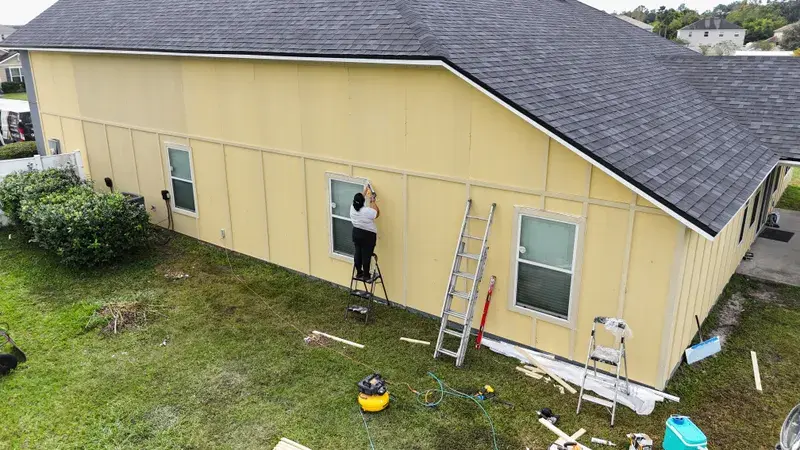
Hail Damage to Florida Roofs
Hail damage appears as dents, cracks, or granule loss on roofing materials. On asphalt shingles, look for dark spots, exposed fiberglass mat, or soft spots when touched. Metal shows dents. Tile cracks or chips. Even small hail (1" diameter) can damage roofs, especially with high wind velocity. Most hail damage is covered by homeowner's insurance with standard deductible.
Key Facts About Hail Damage:
- • Damage may not be visible from ground level
- • Hail damage compromises shingle waterproofing
- • Insurance claims should be filed promptly
- • Small hail with high winds causes more damage than large slow hail
Does Florida Get Damaging Hail?
While Florida isn't in "Hail Alley," the state experiences more hail than many people realize:
- Frequency: Jacksonville area averages 2-4 hail events annually
- Timing: Most common March-May during severe thunderstorm season
- Size: Typically pea to quarter-sized, occasionally larger
- Velocity: High wind speeds increase damage potential
Need Professional Help?
Gimo's Roofing offers free inspections and estimates throughout Jacksonville and Northeast Florida.
Identifying Hail Damage on Asphalt Shingles
Hail damage to asphalt shingles includes:
- Granule Loss: Dark spots where granules are knocked off
- Bruising: Soft spots when you press on the shingle
- Cracks: Impact fractures in the shingle material
- Exposed Mat: Fiberglass or asphalt mat visible
- Random Pattern: Damage scattered across roof randomly
Test for Hail Bruising
Professional inspectors test for bruising by gently pressing suspected impact areas. A hail-damaged spot will feel soft compared to undamaged areas. The impact fractures the mat beneath the granules even when surface damage appears minimal.
Hail Damage on Other Roofing Materials
Metal Roofing
- Visible dents in panels
- Paint chipping or cracking at impact sites
- Cosmetic vs functional damage distinction
- Textured metal hides minor dents better
Tile Roofing
- Cracks or chips in tiles
- Broken corners or edges
- Shattered tiles from large hail
- Individual tiles can be replaced
Flat/Modified Bitumen
- Punctures in membrane
- Granule displacement on cap sheet
- Bruising similar to asphalt shingles
- Check around drains and edges
Repair vs Replacement for Hail Damage
When Repair Is Appropriate
- Limited damage area (less than 30% of roof)
- Matching materials available
- Roof is relatively new (under 10 years)
- Damage limited to specific sections
When Replacement Is Better
- Widespread damage across multiple areas
- Roof was already aging before damage
- Can't match existing materials
- Previous repairs or multiple layers
- Insurance approves full replacement
Filing Hail Damage Insurance Claims
Documentation Needed
- Date of hail event (weather reports confirm)
- Photos of damage from multiple angles
- Professional inspection report
- Written estimate for repairs
- Photos of other property damage (vehicles, siding)
Claim Process Timeline
- Report promptly: Contact insurer within 24-48 hours
- Get inspection: Have professional document damage
- Adjuster visit: Usually scheduled within 1-2 weeks
- Estimate comparison: Compare adjuster's vs contractor's estimate
- Negotiate if needed: Supplement claim for missed damage
- Approval: Receive claim payment minus deductible
Common Hail Claim Issues
- Pre-existing Damage: Insurers may claim damage existed before storm
- Cosmetic vs Functional: Some policies limit cosmetic damage coverage
- ACV vs RCV: Actual cash value deducts depreciation; replacement cost doesn't
- Missed Damage: Adjusters may miss damage; supplemental claims may be needed
Get a Free Roofing Estimate
Instant online pricing or schedule an in-person assessment. Financing available from $99/month.
You Might Also Read
- Hurricane Roof Damage Signs - How to spot storm damage
- Filing a Roof Insurance Claim - Step-by-step guide
- Emergency Roof Repair - What to do right now
Key Takeaways: Hail Damage to Roofs
- • Professional inspection recommended, damage often invisible from ground
- • Don't delay claims, file within policy timeframes
- • Hail compromises waterproofing, even without visible holes
- • Get contractor estimate before adjuster visit
- • Document everything, photos, weather reports, inspection reports
Suspect hail damage to your roof? Contact Gimo's Roofing for a free inspection. We document damage thoroughly for insurance claims. Call (904) 606-5313.